
Reviewed · ISLAND SIGHTSEEING TOURS
Bonaire Essentials Island Tour
Bonaire’s southern shore tells a striking story in a short distance: white salt pans, tiny slave huts, a working lighthouse, flamingos, donkeys, and a beach reached through mangroves. This tour gives you that broad introduction without needing to rent a car or scooter. I especially like the local guides and personal stories, along with the chance to see Bonaire’s salt industry and flamingo country in one outing.
I also like the small-group feel reported on some departures, including one with only seven people, and the air-conditioned vehicle. The main caution is timing. The tour is advertised at about two hours, while the route description calls it three hours, and several departures have been delayed by cruise-ship schedule confusion.
Key points to know before booking
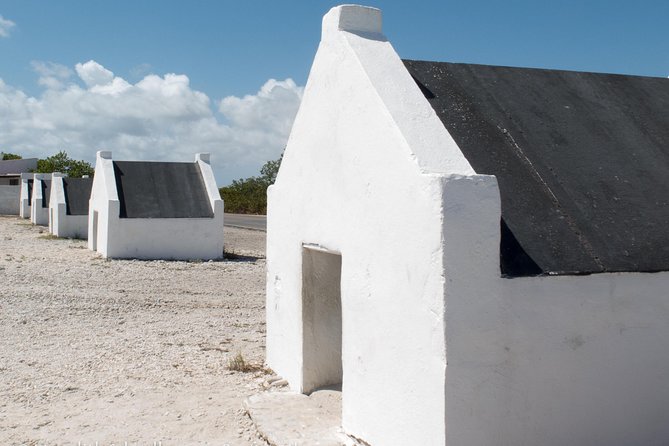
- Salt flats and slave huts: The southern route links Bonaire’s salt production with the small White Pan huts used by enslaved workers.
- Local guides: Oliver, Lucy, Alex, Norville, Harrison, and other guides have led departures, often adding personal stories and local context.
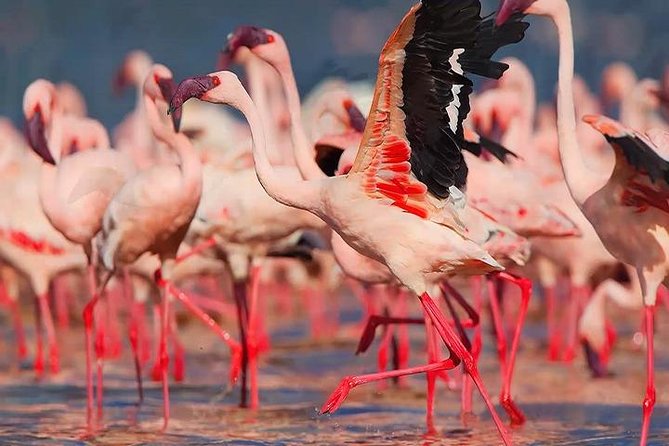
- Flamingo country: The route passes the Pekelmeer Flamingo Sanctuary, one of only four recognized flamingo breeding areas in the world.
- Sorobon stop: You may get time at this shallow, mangrove-fringed beach, but beach time has not always been a clearly explained part of the tour.
- Cruise-port convenience: Pickup begins at South Pier Mall in Kralendijk, though you should confirm the exact meeting time and location.
- Good value for first-time visitors: At $49 per person, it is a practical orientation, but it is not a slow beach day or a full-island expedition.
A quick ride from Kralendijk to southern Bonaire
I see this as an orientation tour rather than a relaxed day at the beach. You board an air-conditioned vehicle near the cruise port in Kralendijk and follow the southern end of Bonaire, stopping at major sights rather than spending long stretches at each one.
The route is useful because Bonaire’s attractions are spread out. The salt pans, slave huts, lighthouse, flamingo sanctuary, and Sorobon Beach are easier to connect by vehicle than on foot. If you are visiting for the first time and want a basic sense of the island, this route covers the subjects you will hear about again and again: salt, slavery, fishing, conservation, and tourism.
The experience is described as roughly two hours in the headline information, but the detailed route describes a three-hour sightseeing tour. Actual duration can vary with traffic, group loading, cruise schedules, and how long the guide spends at stops. I would not book a tight follow-up activity immediately afterward.
More island sightseeing tours in Bonaire:
- South island tour and Snorkel combo
★ 4.5 · 108 reviews - Highlights of Bonaire
★ 4.0 · 76 reviews - Bonaire 2 hour Island Tour & 2 hour Beach Stay
★ 3.5 · 58 reviews
Kralendijk gives you a quick start
The tour begins at South Pier Mall in Kralendijk, close to the cruise-port area. The first stop is brief, about five minutes, so think of it as a starting point rather than a walking tour of the capital.
Kralendijk is where you get your bearings. The town is the island’s main center, and the cruise-port meeting point makes this excursion convenient for a ship visit. The short stop may be enough for a quick look around, but it is not enough to explore town in depth.
Pay close attention to the meeting instructions. Some departures have involved confusion over the operator’s name, the exact pickup point, or changes in cruise arrival and departure times. The company has used orange-shirted staff at its booth outside the port area, but you should still check your booking message carefully and allow time to find the meeting point.
Salt production explains Bonaire’s southern shore
The salt stop is one of the most worthwhile parts of the route. You spend about ten minutes seeing the salt production area at Salt Pier and the broad salt flats farther south.
This is not simply a scenic photo stop. Salt shaped Bonaire’s economy and connects directly to the island’s colonial past. The intense white pans and the open, dry surroundings make the scale of the operation easy to grasp, especially when a local guide explains what you are seeing.
Ten minutes is enough for photographs and a short explanation, but not for a detailed industrial tour. You remain at an observation point rather than entering a production facility. I would bring a hat, water, and sun protection. One person described the heat as the only real negative on an otherwise well-paced trip, and the southern shore offers little shade.
White Pan preserves a difficult chapter
At White Pan, the vehicle stops near the old slave huts for about ten minutes. These small stone structures are stark and easy to underestimate until you understand their purpose. Enslaved workers were forced to spend the night in them while working the salt pans, returning to town only at the end of the workweek.
The guide’s explanation matters here. Without context, the huts can look like minor roadside structures. With a local account of salt production and forced labor, they become a direct reminder of the human cost behind the island’s old economy.
The route also passes the Orange Pan and its yellow slave huts. This part has not always been a full stop. On at least one departure, the bus passed the Orange Pan without passengers getting out, so you should treat it as a drive-by sight unless your guide says otherwise.
This is a place where the tour’s short format shows. You get an introduction, not a long memorial visit. Still, the combination of the salt flats and huts gives the southern route more meaning than a simple scenic drive.
A few more Bonaire days to weigh up
- Double Dip Snorkel Trip
★ 5.0 · 1,305 reviews - Bonaire Landsailing Adventures
★ 5.0 · 652 reviews - Clearbottom Mangrove Kayak & Snorkel tour
★ 5.0 · 597 reviews - Chill and Grill Catamaran Tour in Bonaire
★ 5.0 · 572 reviews
The lighthouse comes with a footnote
Willemstoren Lighthouse is included in the route description, with about ten minutes allocated to the stop. The lighthouse dates to a decision in 1837 by Reinier Frederik baron van Raders, then lieutenant governor of Curaçao and Dependencies, to establish a light at Lacre Punt.
The structure is an important marker of Bonaire’s maritime past and makes a good photograph against the open southern shore. The stop is planned as a look and photo opportunity, not a climb or interior visit.
Here again, confirm the day’s exact route with your guide. One departure did not reach the lighthouse, despite it being listed among the attractions. Schedules and group needs can affect the stops, particularly when a guide is working in more than one language.
Flamingos and donkeys add life to the drive
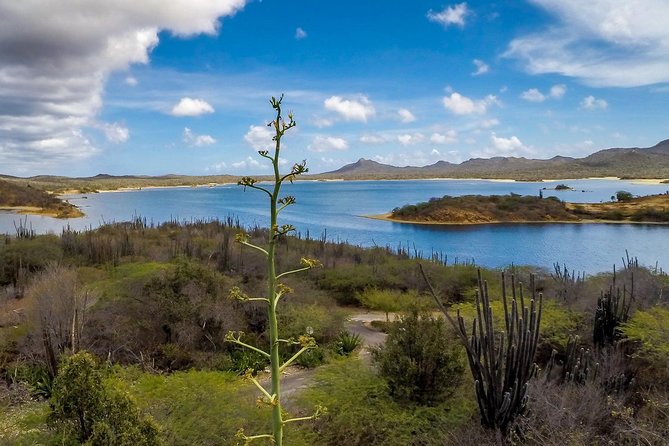
The Pekelmeer Flamingo Sanctuary is one of the tour’s most memorable subjects. Southern Bonaire is one of only four recognized flamingo breeding areas in the world, and the sanctuary protects an important part of that habitat.
You may see flamingos from the roadside or at a viewing area, but this is not presented as a dedicated wildlife excursion. Sightings depend on conditions and location. The same goes for Bonaire’s donkeys, which several guides have pointed out along the route.
I like this part because it shows that the southern shore is not just an industrial zone. Salt production, bird habitat, old labor sites, and tourism all occupy the same narrow area. The guide can help you connect those pieces while you watch for wildlife through the vehicle windows.
Bring a camera with a useful zoom if you have one. You might see flamingos at a distance, and you should not expect to walk freely through the sanctuary.
Sorobon Beach is beautiful, but clarify the plan
Sorobon Beach is the final major stop and usually receives about 15 minutes in the route description. The beach sits in a shallow bay among mangrove trees, with water that may remain knee-deep far out from shore.
This is a different kind of beach from the rocky swimming spots found elsewhere on Bonaire. The shallow water and seagrass make Sorobon important for the marine environment, while the mangroves give the bay a sheltered, unusual character. You get a fine contrast to the bright salt flats and dry southern shore.
The practical issue is that beach time has not always been explained clearly. Some guides have offered passengers the option to stay longer and be collected later, while other people arrived without swimwear or towels because they understood the stop as a brief sightseeing visit. The tour price does not clearly promise a full beach session.
Ask before you leave Kralendijk: Is Sorobon a 15-minute photo stop, or can you remain at the beach for a later pickup? If you hope to swim, pack accordingly and confirm the arrangement with the guide. The beach can also feel crowded, and one account found the shore too rocky for a comfortable beach day. This is best treated as an optional bonus, not the main reason to book.
The guides are the heart of the experience
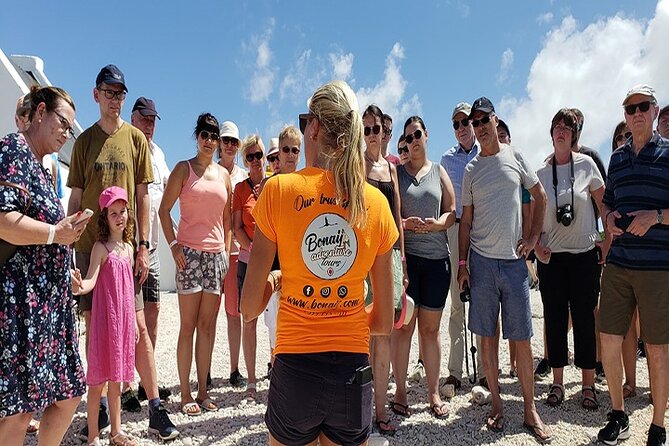
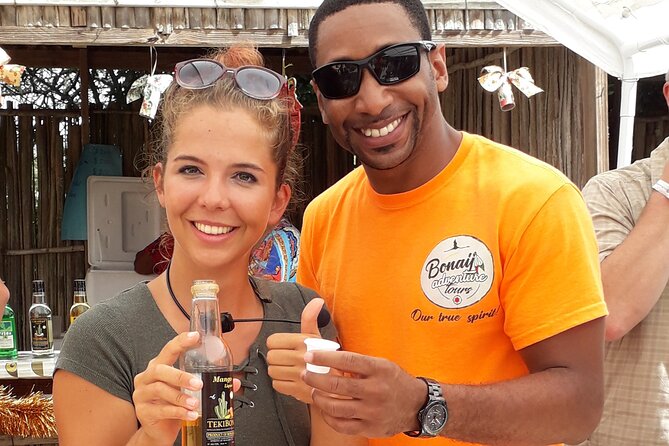
The strongest part of this tour is the human guide. Oliver has been praised for clear commentary and an easy manner. Lucy has been described as warm, attentive, and good at stopping for photographs. Alex has led bilingual tours and explained the island in detail, while Norville has been singled out for an especially informative visit to the flamingo sanctuary.
Harrison has also been described as energetic and friendly. The experience may be operated by a multilingual guide, and some departures have included English and Spanish together. That is useful for mixed groups, but it can affect how much time is available for each language.
A bilingual tour may not deliver identical detail in both languages. On one departure, a microphone problem also made it hard for people in the back to hear during the final part of the ride. If clear narration is important to you, sit near the front and mention the issue promptly if the sound system fails.
The guide can also shape the pace. Some departures have been small and well timed, while others have involved larger groups and waiting for additional passengers. The basic route remains the same, but the feel may range from an intimate local introduction to a more conventional bus excursion.
What $49 buys you
At $49 per person, the value is strongest if you are visiting Bonaire for the first time and do not want to arrange transport yourself. You receive a driver-guide, local commentary, round-trip shared transfer, and an air-conditioned vehicle. The price also covers several stops that would be difficult to link efficiently without your own wheels.
I consider the fee reasonable for a cruise-port orientation, especially if your priority is seeing the salt flats, slave huts, lighthouse area, flamingo country, and Sorobon in one outing. You are paying for transport and interpretation, not admission tickets, since the stops are outdoor sights with no listed entrance fees.
The value drops if you want extended time at the beach, a quiet private guide, or a precise departure schedule. The activity is described as private for your group, yet the inclusion of shared transfer language and the reports of consolidated departures suggest that the practical setup can vary. Ask how your booking will be operated before you arrive.
Timing matters more than the short duration suggests
The most important planning issue is not the drive itself. It is the possibility of waiting.
Several departures have started late because cruise ships changed arrival or departure times, or because the operator was bringing several reservations together. Delays of 15 minutes have occurred, and some people have waited much longer. Cruise-ship time zones have also caused confusion, particularly when the ship’s published time differed from Bonaire’s local time.
If you are on a cruise, read the electronic ticket and any messages sent before the excursion. Confirm the local meeting time, then arrive early at South Pier Mall. If you have an afternoon activity, airport transfer, or ship departure to catch, leave a generous cushion.
The company offers free cancellation up to 24 hours before the start time for a full refund. Changes made within 24 hours are not accepted, and poor weather or failure to meet the minimum number of participants can lead to a rescheduled experience or refund.
Who should book this Bonaire tour?
I would choose this tour if you want a broad first look at Bonaire, prefer an air-conditioned vehicle, and value local explanation over independent wandering. It works especially well for cruise passengers, first-time visitors, families, and anyone who does not want to rent a car or scooter for a short visit.
You will likely enjoy it if you care about island history, salt production, wildlife, and photographs. The guides often add humor and personal stories, which can make the short stops feel more connected.
I would look elsewhere if you want a full beach day, guaranteed time at the lighthouse, or minute-by-minute reliability. A private car and guide would give you more control, while a dedicated beach or snorkeling outing would give you more time in the water.
Should you book the Bonaire Essentials Island Tour?
Book it for the story of southern Bonaire, not for a long swim. At $49, it is a sensible way to connect the salt flats, slave huts, flamingos, lighthouse, and Sorobon without organizing transport yourself.
Before paying, confirm the meeting point, local departure time, expected duration, language, and Sorobon arrangements. If you can accept some schedule flexibility and sit near the front for the best chance of hearing the guide, this is a useful and reasonably priced introduction to the island.
FAQ
Where does the Bonaire Essentials Island Tour begin?
The tour begins at South Pier Mall in Kralendijk, near the cruise-port area.
Where does the tour end?
The activity ends back at the meeting point.
How long does the tour last?
The headline duration is approximately two hours, while the detailed route describes a three-hour sightseeing tour. Allow extra time because actual duration can vary.
What is included in the price?
The tour includes a driver-guide, local guide, professional guide, round-trip shared transfer, and an air-conditioned vehicle.
What sights are visited?
The route includes Kralendijk, the salt production area, the White Pan slave huts, the Orange Pan area, Willemstoren Lighthouse, the Pekelmeer Flamingo Sanctuary area, and Sorobon Beach.
Is Sorobon Beach a swimming stop?
Sorobon Beach is included as a stop, but the amount of beach time can vary. Ask the guide whether you can stay longer or whether it will be a short sightseeing visit.
Is the tour offered in more than one language?
The tour may be operated by a multilingual guide. Some departures have included English and Spanish.
Can most people participate?
The activity states that most people can participate and that it is near public transportation.
What is the cancellation policy?
You can cancel at least 24 hours before the start time for a full refund. Cancellations or changes made less than 24 hours before the experience are not accepted. If poor weather or an insufficient number of participants cancels the tour, you are offered another date or a full refund.
Just added around Bonaire
- South island tour and Snorkel combo★ 4.5 · 108 reviews
- Snorkel marathon★ 4.5 · 47 reviews
- VIP Private Highlight Tour – North & South★ 5.0 · 37 reviews
- Washington Park Tour with Local Guide on Bonaire★ 4.5 · 53 reviews
- Fully Private North and South Tour with a Local Guide.★ 4.5 · 80 reviews
- VIP Private Snorkeling Tour with Underwater Photos★ 5.0 · 111 reviews
- Cave Tour with Local Guide★ 5.0 · 107 reviews
- Luc’s Private Group Bonaire Open Bus Tour★ 5.0 · 139 reviews
Island Sightseeing Tours, compared.
For hotel guests: Guided ATV Tour Dutch/French St. Maarten – Highlights & Beach
Read our review →
Let me show you MY Island Tour With visit to El Yunque
Read our review →
Pirate Jeep Sightseeing Adventure!
Read our review →
Electric Bike Bajan Sightseeing Experience (Transport Included)
Read our review →
Adventure Antigua – The Xtreme Circumnavigation
Read our review →Browse the lists this tour appears in