
Reviewed · ISLAND SIGHTSEEING TOURS
Bonaire 2 hour Island Tour & 2 hour Beach Stay
Bonaire’s salt pyramids are the star of this four-hour outing. You’ll also see old slave huts, a working lighthouse, flamingo country, and the island’s windy southern coast before spending about two hours at Sorobon Beach. I like the way this tour packs Bonaire’s main southern sights into one cruise-stop plan, and I like the guides’ local stories, especially when Ferdinand, Desmond, or Kiki is leading the bus.
The $38.95 price can be fair if you want transport, a guided island loop, and a beach stop without arranging several taxis. The beach is shallow and has restrooms, chairs, and a restaurant, which makes the afternoon easy. The main concern is timing: several departures have run late, and an overcrowded bus or unclear return arrangement can take the shine off the day.
Key points to know before you book
- Salt pyramids and salt history: See Bonaire’s huge white salt piles and learn how sea, sun, and wind produce the island’s salt.
- A short but useful history tour: White Pan’s slave huts and the 1838 Willemstoren Lighthouse give the sightseeing portion real substance.
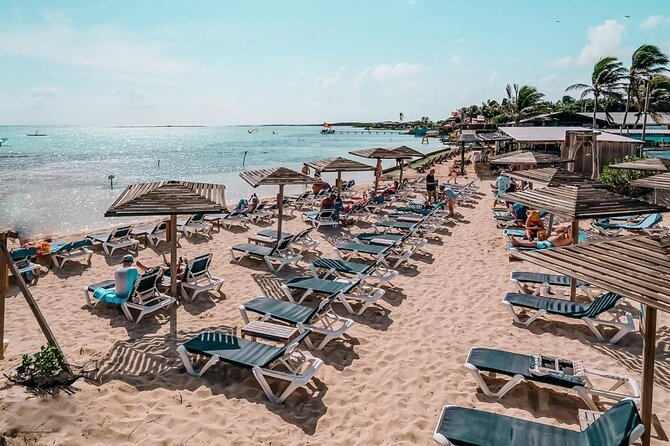
- Two hours at Sorobon Beach: Expect shallow water, a restaurant, restrooms, and beach chairs, but the shore can be crowded and partly rocky.
- Cruise-port convenience: The tour begins and ends at the Bonaire Cruise Port, with travel time included in the four-hour schedule.
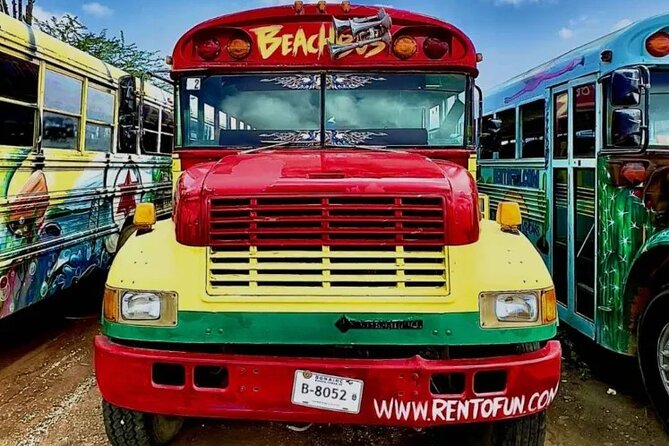
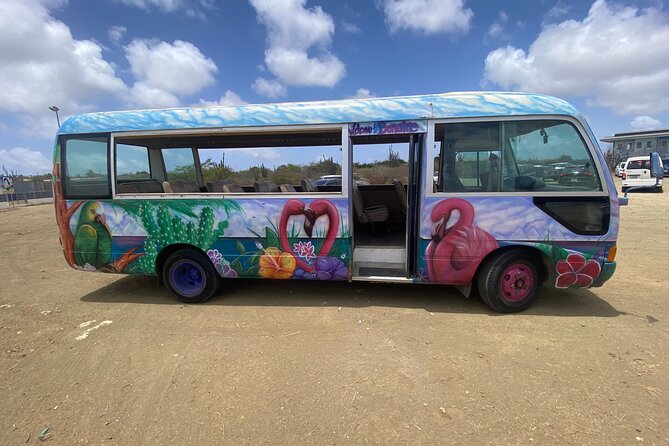
- Music and mixed transport: Some departures use an open-sided party bus, while others use an air-conditioned bus. Music may be part of the ride.
- Build in a time cushion: Late starts have been reported, so this is best for a ship day with plenty of breathing room.
Bonaire in four hours: what this tour really delivers
This is a south-island introduction rather than a full tour of Bonaire. The route focuses on the salt works, former slave quarters, lighthouse, beaches, and Lac Bay. You won’t get a slow, detailed look at Kralendijk or the northern parks, but you will see the places most closely tied to Bonaire’s coastal history.
The advertised format is about two hours on the bus followed by two hours at the beach. That includes driving between stops, so the actual sightseeing time at each landmark is short. I see that as a strength for a first visit, provided you want a broad look rather than long walks or extended exploration.
Your guide supplies the story that links the stops. Ferdinand, Desmond, and Kiki are among the guides who have led this route. The best guides explain how salt production, forced labor, wind, shipping, and tourism fit together instead of simply naming each stop.
The group may be large, with up to 120 people allowed. That matters. A full bus can feel lively, especially when music is playing, but you may have less room for questions and less control over the schedule.
More island sightseeing tours in Bonaire:
- South island tour and Snorkel combo
★ 4.5 · 108 reviews - Highlights of Bonaire
★ 4.0 · 76 reviews - Bonaire Essentials Island Tour
★ 4.5 · 50 reviews
Leaving the port along Bonaire’s southwest coast
The trip begins at the Bonaire Cruise Port in Kralendijk. From there, the bus heads along the southwest coast, passing Flamingo Airport and Te Amo Beach. The drive is part of the introduction, not just dead time, since you begin seeing the flat, dry coastal setting and the bright water around the island.
Te Amo Reef is attractive to snorkelers and divers, though this tour does not provide time for a water stop there. You’ll see the area from the road, then continue toward the salt works.
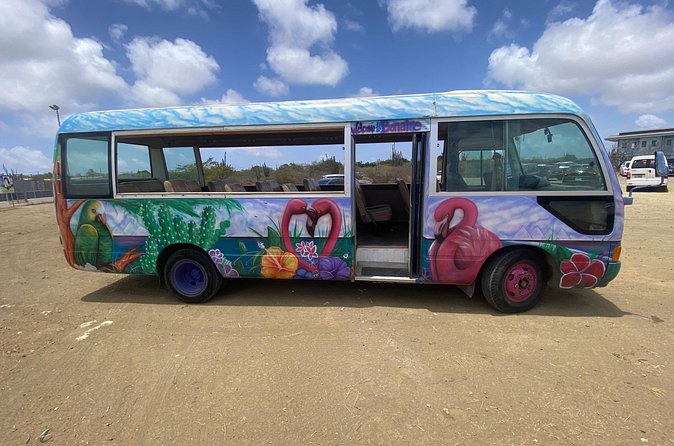
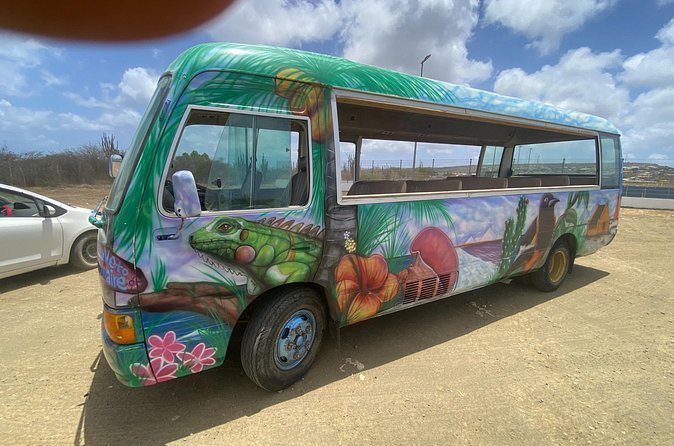
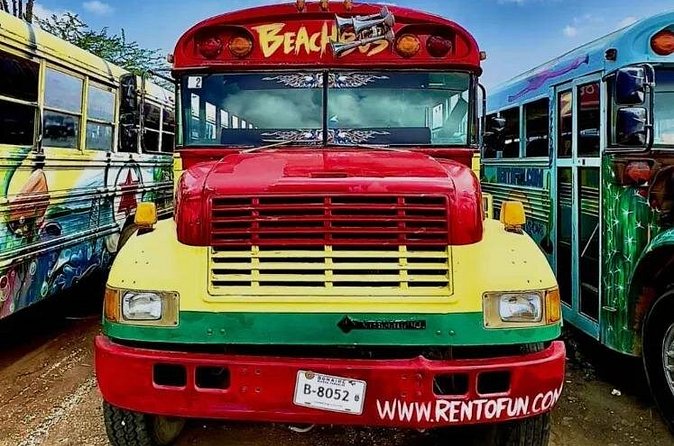
This first drive can also reveal the tour’s style. Some buses are open-air and roomy, a welcome feature in Bonaire’s heat. Other departures have used air-conditioned buses. Music may play during the ride, and the volume has not always been gentle, so you should not expect a quiet sightseeing coach.
Salt Pier and Bonaire’s enormous salt pyramids
The Salt Pier area is one of the most memorable sights on the route. Bonaire uses sun, wind, and seawater to form salt, which gathers into massive white pyramids beside the ponds. The piles can reach about 50 feet high, with each one holding roughly 10,000 tons of salt.
You get around 15 minutes here. That is enough for photographs and a quick explanation, but not enough for a long walk or detailed look at the entire operation. The salt ponds make a strong visual contrast with the blue Caribbean and the pale shoreline.
I especially like this stop because it shows an industry that still shapes Bonaire rather than presenting a purely scenic version of the island. The salt is not just a pretty backdrop. It explains why this dry coast has been important for centuries.
Take care around the bright salt surface. Sunlight reflects strongly here, and the heat can build quickly. Bring water, a hat, and sun protection. Bottled water is listed as included, though some departures have failed to provide it, so carrying your own bottle is sensible.
Pink Beach and the road toward White Pan
After the salt area, the bus passes Pink Beach. The beach stretches about 1.5 kilometers along the southwest coast and today is made mainly of petrified coral. The name refers to the pale pink color created by the coral and surrounding material.
You do not get a long beach stay here. It is a roadside view that helps you understand the coast before the next historical stop. If you are hoping for a classic sandy beach with swimming time, this is not it.
The route then continues toward White Pan, where the salt ponds and former slave quarters tell a more difficult part of Bonaire’s past. This is where the guide’s explanation matters most.
More short trips in Bonaire:
- 2 Hour Mangrove Kayak and Snorkel Tour
★ 5.0 · 42 reviews - 2 Hour Champagne Sunset Cruise from Grace Bay, Providenciales (Adult Only)
★ 5.0 · 1,010 reviews - 2 Hours Turtle Feeding, Shipwreck & Reef Snorkeling Tour Barbados
★ 5.0 · 307 reviews - 2-Hour TukTuk Rental with an Experienced Guide and Driver
★ 4.5 · 237 reviews
White Pan slave huts and the human cost of salt
The small huts at White Pan were built for enslaved workers involved in the salt operation during the 1800s. They are simple structures, and their size makes the conditions clear without needing much decoration.
You spend about 15 minutes here. That may feel brief, but it is enough to hear the basic story and look at the huts. The tour is not a full museum visit or an extended historical program. It is a short introduction that places the salt industry in its human context.
I value this stop because it keeps the salt pyramids from becoming just a striking photograph. Ask your guide how the salt work was organized and how the huts fit into the operation. Guides such as Ferdinand have been praised for explaining the salt manufacturing and slave quarters in a way that makes the history easier to understand.
Kite Beach and Bonaire’s steady northeast wind
The bus next passes Kite Beach, one of the island’s main areas for kite surfing. Bonaire’s wind generally comes from the northeast, creating dependable conditions for the sport.
You may see kite surfers on the water, but this is another pass-by point rather than a long activity stop. The wind also helps explain the island’s appeal to people who come for water sports. It is a useful reminder that Bonaire’s beaches are not all designed for quiet swimming.
This stretch can be exposed and hot. If you are sensitive to sun or wind, the bus offers a welcome break between the outdoor stops.
Willemstoren Lighthouse, built in 1838
Willemstoren Lighthouse is the final major sightseeing stop before the beach. Built in 1838 and named for King Willem I of the Netherlands, it rises about 21 meters and was Bonaire’s first lighthouse.
You get about 10 minutes here. That gives you time for photographs and a short talk, though not an extended visit inside the lighthouse. The setting is especially useful for understanding how ships approached the southern coast and why navigation mattered around the salt pans.
This stop also adds variety. The salt pyramids are industrial, the huts are historical, and the lighthouse is maritime. Together, they create a clearer picture of Bonaire than a simple drive past beaches would provide.
The bus then runs alongside Pekelmeer, or Brine Lake, in the southwest. The lake is part of the salt-producing area and ties the previous stops together. It is a scenic drive, not a separate walking visit.
Two hours at Sorobon Beach and Lac Bay
The final stop is Sorobon Beach, on the southern side of Lac Bay. Lac Bay covers about 700 hectares and includes Sorobon Beach on the south and Ho Cai Beach toward the northeast. The water here is shallow, and you can wade out a long way before it becomes deep.
That shallow water is a major reason families and beginner windsurfers like this area. It also means Sorobon may not match your idea of a classic deep-water Caribbean beach. The entry can be rocky at first, and the shoreline is not always broad. Farther out, the bottom may become easier underfoot, but you should still watch where you step.
You have roughly two hours here. The beach area includes restrooms, a restaurant, and beach chair amenities. Food and drinks are available, and fish bites have been a popular choice. This makes the stop practical for a cruise day because you do not need to arrange lunch elsewhere.
The catch is crowding. Several tour groups may share the same beach, and available chairs can be limited. Parts of the beach may be blocked off, leaving only one practical entry point. Kite surfers may also be active nearby, so the scene can feel more like a shared recreation area than a secluded shore.
I would choose Sorobon for shallow water, easy facilities, and a relaxed break after the bus tour. I would not choose this excursion mainly for a wide, empty beach. If your priority is swimming in deep clear water from a broad sandy shore, the beach may disappoint.
Timing, transport, and the cruise-ship question
The advertised duration is about four hours, including driving. That is a comfortable length on paper, but the schedule depends heavily on the departure being punctual and the bus returning as promised.
Some departures have left on time and returned well ahead of the ship’s departure. Others have started 20, 30, 90, or even 120 minutes late. A delayed departure cuts into the sightseeing and beach portions, which is especially frustrating if you have booked another activity later in the day.
I would not book this tour with a tight afternoon plan. Give yourself a generous buffer before all-aboard time. The activity ends back at the cruise-port meeting point, but you should confirm the exact return time with the driver before leaving the bus.
The beach pickup also deserves attention. The standard plan is to collect the group after the beach stay, but an individual passenger may not receive a separate return run. One person who stayed at the beach alone used a taxi for about $5. Another group had trouble finding the bus after the planned pickup time.
Before you walk away from the bus, ask clearly: What time are we leaving, and exactly where should we wait? If you decide to return early, do not assume the tour vehicle will come back just for you.
Is $38.95 a good value?
At $38.95 per person, this can be a reasonable package for a cruise passenger who wants one booking, transport, a guide, several southern sights, and a beach with facilities. Private taxis or separate arrangements can cost more, especially for a solo passenger or small group.
The value drops if the bus starts late, the beach time is shortened, or bottled water is missing. Some direct island sales have reportedly been offered for about $25, but that lower price may not include the same booking channel, pickup arrangement, or availability. Buying at the port might save money, yet it also creates more uncertainty on a busy cruise day.
For me, the strongest value is convenience. You get a practical overview without needing to negotiate several rides. The weakest value is the lack of schedule control. This is a shared excursion, not a private island day.
Who should book this Bonaire tour?
I would recommend it to you if:
- You are visiting Bonaire for the first time.
- You want salt history, slave quarters, a lighthouse, and a beach in one outing.
- You prefer a guided bus ride to arranging transport yourself.
- You enjoy music and a social group atmosphere.
- You want shallow water, chairs, restrooms, and food near the beach.
- You have enough time before your ship’s departure to handle a late start.
I would look elsewhere if you need a precise departure time, quiet transport, a small group, or a broad empty beach. It is also not the right choice if you want to explore Bonaire’s north, spend most of the day snorkeling, or remain at one beach without sharing space with other groups.
The tour can be fun and informative, especially with a strong guide. Just treat the four-hour schedule as an estimate rather than a guarantee, and keep your own time cushion.
Final booking advice for a cruise day
Book this tour if your ideal Bonaire stop combines a quick history lesson with a practical beach break. The salt pyramids, White Pan huts, and lighthouse give the ride more substance than a simple scenic loop, while Sorobon provides food, facilities, and shallow water.
Skip it if the beach itself is your main reason for booking. Sorobon can be lovely, but it can also be crowded, rocky at the edge, windy, and short on chairs. The best choice is to confirm the departure and return plan, carry water and sun protection, and avoid scheduling anything important immediately afterward.
FAQ
How long does the Bonaire Island Tour and Beach Stay last?
The activity lasts about four hours, including travel time. The plan allows about two hours for the island tour and two hours at Sorobon Beach.
Where does the tour begin and end?
It begins at the Bonaire Cruise Port in Kralendijk and ends back at the meeting point.
Which places does the sightseeing portion visit?
The route includes the Salt Pier area, Pink Beach, the White Pan slave huts, Kite Beach, Willemstoren Lighthouse, and the Pekelmeer brine lake area.
Is Sorobon Beach included?
Yes. The tour includes about two hours of free time at Sorobon Beach.
What facilities are available at the beach?
Sorobon Beach has restrooms, a restaurant, and beach chair amenities.
Is bottled water included?
Bottled water is listed as included. Because some departures have not provided it, carrying your own water is a sensible precaution.
Can most people participate?
The activity states that most people can participate and that it is near public transportation. Specific accessibility details are not provided.
What is the cancellation policy?
You can cancel at least 24 hours before the start time for a full refund. Cancellations or changes made within 24 hours are not refunded or accepted. If poor weather or low participation cancels the tour, you can receive a different date or a full refund.
Just added around Bonaire
- South island tour and Snorkel combo★ 4.5 · 108 reviews
- Snorkel marathon★ 4.5 · 47 reviews
- Fully Private North and South Tour with a Local Guide.★ 4.5 · 80 reviews
- VIP Private Highlight Tour – North & South★ 5.0 · 37 reviews
- Washington Park Tour with Local Guide on Bonaire★ 4.5 · 53 reviews
- VIP Private Snorkeling Tour with Underwater Photos★ 5.0 · 111 reviews
- Cave Tour with Local Guide★ 5.0 · 107 reviews
- Luc’s Private Group Bonaire Open Bus Tour★ 5.0 · 139 reviews
Island Sightseeing Tours, compared.
For hotel guests: Guided ATV Tour Dutch/French St. Maarten – Highlights & Beach
Read our review →
Let me show you MY Island Tour With visit to El Yunque
Read our review →
Pirate Jeep Sightseeing Adventure!
Read our review →
Electric Bike Bajan Sightseeing Experience (Transport Included)
Read our review →
Adventure Antigua – The Xtreme Circumnavigation
Read our review →Browse the lists this tour appears in