
Reviewed · SCUBA DIVING
Small-Group Aruba Scuba Diving for Non-Certified Divers
Aruba makes it easy to try scuba without signing up for a full certification course. This two-hour shore-based session begins with about 30 minutes of instruction, followed by equipment practice in shallow water and an underwater visit at Tres Trapi or Mangel Halto. You do not need previous experience, but you do need to be comfortable with the medical requirements.
I like the very small groups, with no more than four people and generally two beginners per instructor. I also like the patient approach used by instructors such as Alonso, Alvaro, Steve, Jay, and Michel. The main drawback is that this is a first-timer introduction, not a long boat trip to a dramatic offshore site. Some people may find the depth and route modest.
Key points to know before booking
- A gentle first step: You learn basic theory and skills on land before entering the water.
- Two participants per instructor: This gives you close help with breathing, mask clearing, ear equalizing, and nerves.
- Shore access at Tres Trapi or Mangel Halto: You walk into the water rather than boarding a boat.
- Wildlife can be excellent: Turtles, eels, pufferfish, octopuses, schools of tropical fish, coral, and flying fish have all been seen.
- Bring your medical homework: A yes answer on the PADI or SDI questionnaire may require written permission from your doctor.
- Plan around flying: You must wait at least 18 hours after the session before boarding an aircraft.
What the two-hour Aruba scuba session is really like
This outing is built for people who are curious about scuba but are not certified. You are not thrown into open water with a tank and told to figure it out. The session starts at about 2 p.m. with a theory talk and safety briefing lasting roughly 30 minutes.
That opening matters. You learn how the equipment works, how to breathe through the regulator, how to clear a mask, and how to deal with basic underwater problems. The exact teaching style can vary by instructor, but the experience includes clear explanations and hands-on practice before you go farther from shore.
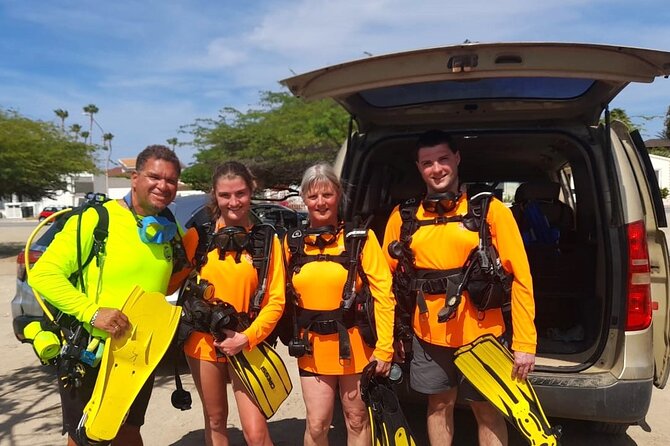
After the briefing, you receive a BCD, regulator, weights, tank, mask, and fins. You can use your own mask and fins if you prefer. That is a useful option if you already own equipment that fits well, since a comfortable mask can make a big difference during your first attempt.
The group then enters shallow water to practice. This is where you get used to the weight of the equipment, breathing steadily, and managing simple skills without the pressure of being far from land. If you are nervous, this part is not something to rush.
Once you are comfortable, the instructor takes you toward deeper water to see the underwater area. The session commonly lasts about 45 minutes in the water, although your air use determines the exact length. Beginners often breathe more quickly at first, and tanks are not used until completely empty.
More Scuba Diving in Aruba
- Aruba 2-Tank Dive Excursion for Certified Divers
★ 4.5 · 230 reviews - Aruba One or Two Tank Scuba Dive
★ 4.5 · 195 reviews - Private First-Time Dive on Aruba’s Reef and Wreck Site
★ 5.0 · 192 reviews
Tres Trapi gives beginners a calm starting point
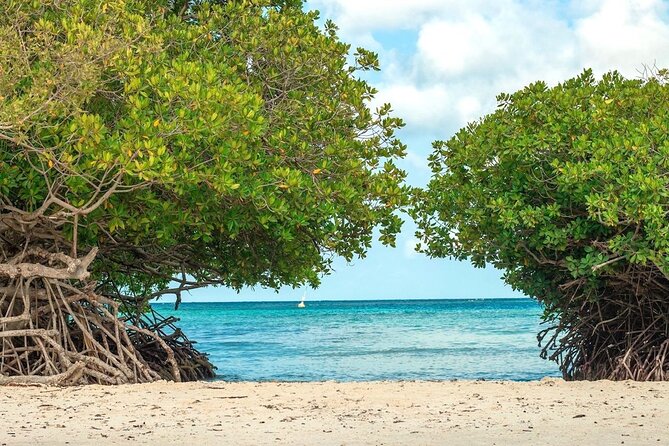
Tres Trapi is the main meeting point listed for the activity, at L. G. Smith Boulevard 105 in Noord. It is a shore-based location, which means there is no boat ride, no open-sea boarding process, and no need to deal with seasickness before your first attempt.
That simplicity is one of the best reasons to choose this outing. You can focus on breathing and staying relaxed instead of managing a moving boat. The shallow entry also gives the instructor an easier place to watch your skills and decide when you are ready to continue.
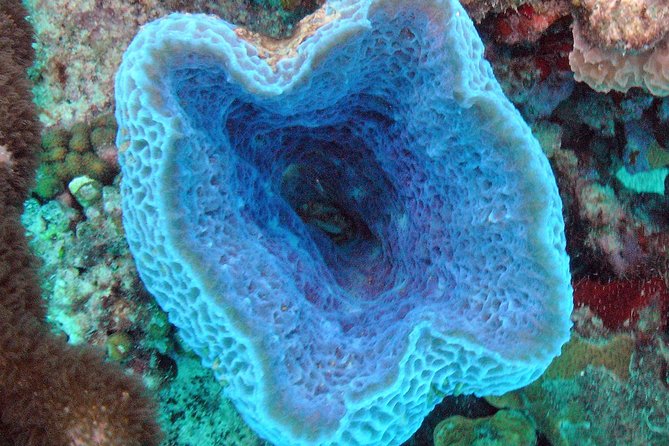
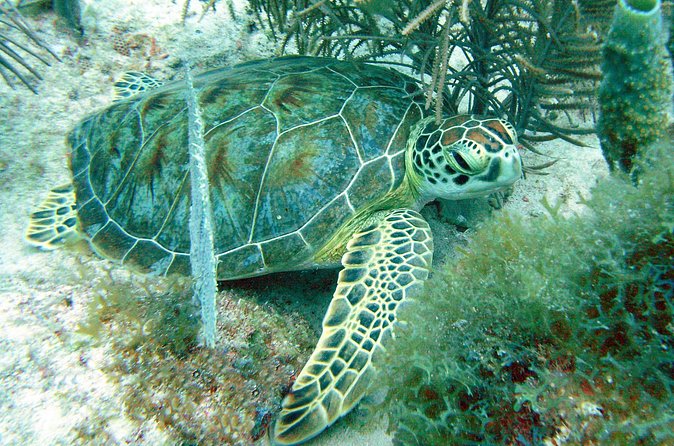
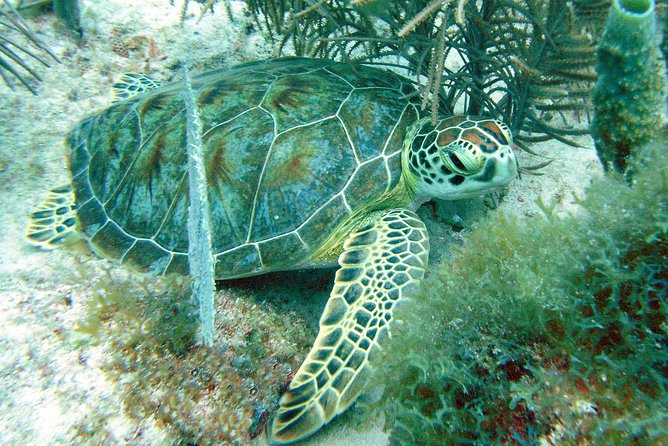
The underwater scenery can be much better than you might expect from a beach entry. You might see schools of tropical fish, eels, pufferfish, octopuses, coral, and sea turtles. Some people have seen hawksbill turtles feeding close by, while others have followed a turtle through the water.
Tres Trapi is not presented as the deepest or most dramatic site around Aruba. That is a feature for some beginners and a limitation for others. One experienced participant felt the session could have gone farther out to a more impressive site, but the shallower setting is intentional. It keeps the first attempt manageable.
If you want a calm introduction and a chance to see real marine life, Tres Trapi makes sense. If you already have substantial scuba experience and want depth, wrecks, or a longer offshore route, this is probably too basic.
Mangel Halto may be the alternate location
The session can also take place at Mangel Halto. The exact location depends on conditions and the operator’s plan for the day. Since the activity requires good weather, the site may change or the session may be moved to another date if conditions are poor.
You should not book this expecting one guaranteed underwater route. The important point is that both locations offer shore access and are used to introduce beginners to Aruba’s marine life. The instructor decides how far to go based on your comfort, skills, and conditions.
That flexibility is valuable for a first attempt. A nervous participant may remain shallower, while someone who settles in quickly can continue farther. One person in a couple chose not to go all the way down and snorkeled above the group, while the other continued with the instructor. That kind of adjustment is possible because the group is small.
The two-person instructor ratio is the big advantage
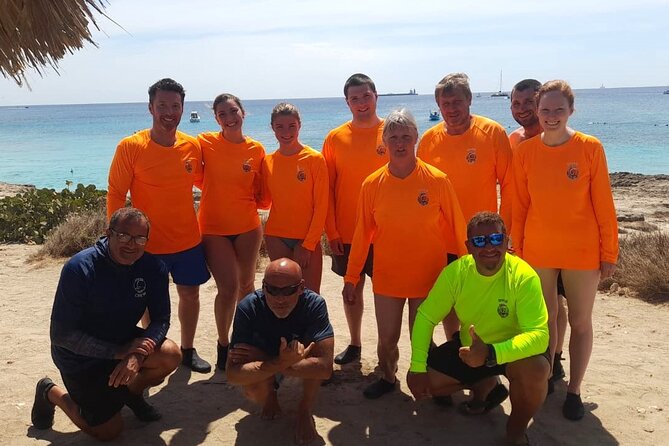
The maximum group size is four, with a stated limit of two non-certified participants per instructor. For a first underwater session, that ratio is more important than flashy equipment or a long itinerary.
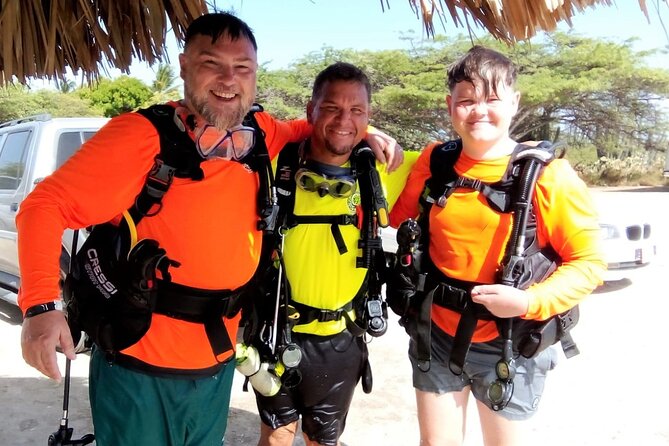
You have someone close by when you need help clearing a mask, equalizing your ears, adjusting your breathing, or calming down. Instructors also perform frequent checks beneath the surface. Several people have singled out the patience of Alonso, Alvaro, Steve, Jay, and Michel, though the staff member working with you depends on the day.
That close supervision also allows the instructor to adapt the pace. If you are ready to continue, you can move on from the shallow practice. If you are uneasy, you can stay shallow or stop. The session is not a test, and there is no benefit to pretending you feel comfortable when you do not.
This is especially useful for families and couples with different confidence levels. Children must be at least 10 years old, and the small group format gives the instructor a better chance to keep track of each person. You should still discuss the activity honestly with younger participants before booking. Breathing through a regulator and managing a mask underwater can feel strange at first.
More scuba diving off Aruba:
- Aruba Certified Scuba Diving
★ 5.0 · 182 reviews - Aruba PADI Scuba Diving Program Non Certified Divers
★ 5.0 · 99 reviews - Half-Day Aruba Intro Diving Course for Beginners
★ 4.5 · 97 reviews - Aruba 2-Tank Guided Dive for Certified Divers / rental equipment
★ 4.5 · 70 reviews
What you may see beneath Aruba’s water
The wildlife is a major reason to choose this experience instead of simply snorkeling. The exact sightings cannot be guaranteed, but the recorded encounters include turtles, eels, pufferfish, octopuses, angel fish, flying fish, schools of silver fish, and many other tropical species.
Coral formations are also part of the setting. One participant described a coral wall, while others enjoyed fish moving through the reef area. Clear, calm water and comfortable temperatures have been reported, though weather can affect visibility. One session had murkier water because of conditions, a reminder that the Caribbean does not produce identical views every afternoon.
You will not spend the entire activity looking for wildlife. First you must learn to control your equipment and breathing. Once those tasks become easier, you can pay more attention to the reef and animals around you.
That progression is part of the appeal. The first few minutes may be about remembering to breathe continuously, clear your mask, and equalize your ears. Then you look up and realize you are moving through a world that is impossible to see from the beach.
Is $114 a fair price?
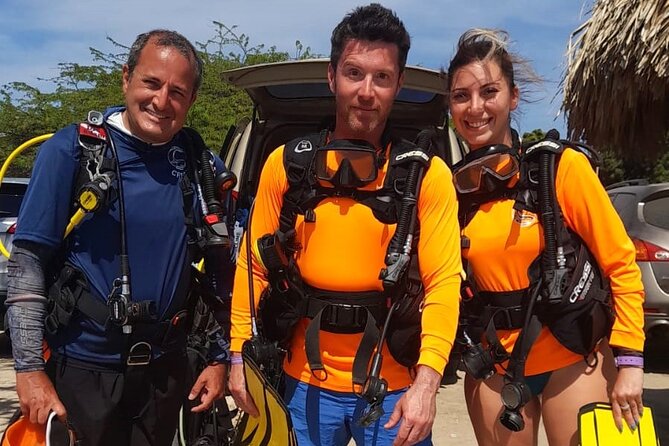
At $114 per person, this is not the cheapest way to spend two hours in Aruba. You also pay a separate BBO fee of $7 per person. Still, the price includes instruction, equipment, the tank, and close supervision in a very small group.
You are paying for access to scuba without committing to the time and cost of certification. A full certification course requires more study and several training sessions. This outing lets you find out if you enjoy the feeling before making that larger commitment.
The value is strongest if you have always wanted to try scuba but feel unsure about it. A patient instructor can help you learn whether the equipment and underwater breathing feel natural. Several people finished the session wanting to pursue an open-water certification, and the operator offers PADI and SDI certification options.
The value is weaker if your main goal is a lengthy underwater tour or an offshore site. You may spend a good part of the two hours in briefing, equipment setup, and shallow practice. That is appropriate for a first attempt, but it means the actual underwater exploration is not the whole outing.
Medical rules deserve attention before you pay
Read the PADI Discover Scuba Diving or SDI Discovery Dive medical questionnaire before booking. This is the most important practical warning attached to the activity.
A yes answer does not automatically mean you cannot participate. It may mean that you need to consult a doctor and bring written permission. However, you should settle that question before arriving. One person could not take part because of the medical questionnaire and was unsure about a refund afterward.
Scuba requires good health in the respiratory and circulatory systems, and all body air spaces must be normal and healthy. The activity is not suitable if you have certain heart problems, are under the influence of alcohol or drugs, or are taking medication without first checking with a doctor.
You should also be in reasonable condition and not extremely overweight, since moving in shallow water with scuba equipment can be strenuous. These rules are not meant to discourage you. They help prevent a stressful surprise at the beach.
Getting there, pickup, and timing
The listed meeting point is Tres Trapi Beach, and the activity ends back at the meeting point. Pickup is available from Palm and Eagle resorts, Harbor House, Renaissance resorts, and the cruise terminal.
For cruise passengers, the pickup point is opposite the terminal exit at a Citgo gas station. Confirm the pickup details when you book, since a clear meeting plan matters when your ship has a fixed departure schedule.
The scheduled start time is 2 p.m. The session lasts about two hours, but you should allow extra time around it for pickup, equipment handling, and returning to your resort. Cruise passengers should be particularly careful about the ship’s all-aboard time.
You receive confirmation at booking, and the experience offers a mobile ticket. Free cancellation is available if you cancel at least 24 hours before the start time. Cancellations or changes inside that window are not refunded, except that poor weather may lead to a different date or a full refund.
Flying after the session
Do not schedule a flight immediately after this activity. You must wait at least 18 hours after scuba before flying.
That rule applies even though this is a short, beginner-level session from shore. If you are leaving Aruba the next morning, check your departure time carefully. A late afternoon session followed by an early flight may not work.
This is one reason the 2 p.m. start is best suited to people who have at least another full day on the island. You can enjoy the activity without watching the clock for your flight.
Who will enjoy this experience most
I would choose this outing if you want a controlled first introduction, close support, and a chance to see Aruba below the surface without taking a certification course.
It suits:
- First-time participants who want patient instruction
- Couples with different confidence levels
- Families with children age 10 and older
- Cruise passengers with enough time away from the ship
- Snorkelers who want to try breathing underwater
- Anyone considering future PADI or SDI certification
I would be more cautious if you want deep water, a boat-based route, a wreck, or a full day on the reef. You should also reconsider if you have medical concerns, cannot meet the 18-hour no-fly window, or dislike the idea of wearing a mask and regulator.
Should you book the Aruba scuba session?
Yes, if you want a low-pressure first taste of scuba and value careful instruction over maximum depth. The combination of shallow practice, small groups, and close instructor attention gives you a fair chance to feel comfortable.
The strongest reason to book is the two-to-one instructor ratio. The wildlife is an excellent bonus, with real possibilities for turtles, eels, coral, and schools of fish. Just keep your expectations in the right place: this is a beginner session, not an advanced reef expedition.
Before booking, complete the medical questionnaire, check your flight schedule, and remember the extra $7 BBO fee. If those details work for you, $114 buys more than equipment and a short swim. It gives you a sensible way to find out if Aruba’s underwater world is where you want to go next.
FAQ
How long does the Aruba scuba experience last?
The activity lasts approximately two hours. About 30 minutes is used for theory and briefing, followed by equipment setup, shallow-water skills, and underwater exploration.
What time does the activity start?
The scheduled start time is 2 p.m.
Where does the activity take place?
The session takes place from shore at Tres Trapi or Mangel Halto. The listed meeting point is Tres Trapi Beach at L. G. Smith Boulevard 105 in Noord, Aruba.
How many people are in each group?
The maximum group size is four participants. For non-certified participants, the instructor ratio is no more than two people per instructor.
What equipment is included?
The equipment includes a BCD, regulator, weights, tank, mask, and fins. You may use your own mask and fins if you prefer.
What is the minimum age?
The minimum age is 10 years.
Can I fly after the activity?
No. You must wait at least 18 hours after scuba before flying.
Is transportation available?
Yes. Pickup is offered from Palm and Eagle resorts, Harbor House, Renaissance resorts, and the cruise terminal. Cruise terminal pickup is at the Citgo gas station opposite the terminal exit.
What happens if the weather is poor?
The experience requires good weather. If it is canceled because of poor weather, you will be offered another date or a full refund.
Is the $114 price the full cost?
No. The listed price is $114 per person, and a separate BBO fee of $7 per person is not included.
Just added around Aruba
- Private Tour: Essential Tour of Aruba★ 5.0 · 68 reviews
- UTV Island Tour around Aruba★ 5.0 · 175 reviews
- UTV and Jeep Island Adventure Mix Up★ 5.0 · 73 reviews
- The Whole Story Tour + A Ride★ 5.0 · 141 reviews
- Arubabound Transfers★ 5.0 · 31 reviews
- Made in Aruba Sightseeing Tour★ 5.0 · 252 reviews
- Aruba Private Luxury Boat Tours – Sail, Snorkel, Fishing and More★ 4.5 · 81 reviews
- VIP Luxury SUV Airport Transfer★ 5.0 · 95 reviews
Scuba Diving, compared.
Beginner Scuba Diving with Turtles and Videos, San Juan
Read our review →
Sea Trek Helmet Dive at Coral World Ocean Park
Read our review →
Curacao Helmet Diving-Walk the Ocean Floor, No Swimming Required
Read our review →
Two-Tank Morning Dive Trip for Certified Divers
Read our review →
Two-Tank Dive for Certified Diving in St Thomas
Read our review →
Scuba Doo Diving Experience in Punta Cana
Read our review →Browse the lists this tour appears in