
Reviewed · SCUBA DIVING
Aruba PADI Scuba Diving Program Non Certified Divers
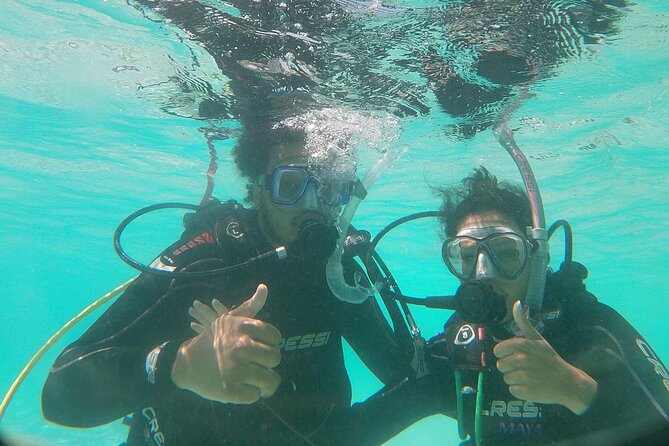
Aruba’s Mangel Halto Reef gives you a proper first taste of scuba, not just a quick swim with a mask. You begin with a 20-minute video, a PADI booklet, and a short quiz, then practice on land and in shallow water before heading into the sea with an instructor close by.
I especially like the four-person maximum, which gives your instructor time to watch your breathing, mask, and comfort level. I also like that the price includes the equipment, water, and small snacks such as bananas or chocolate. The main caution is that this is not a certification course, and anyone uneasy in the water should confirm suitability before booking.
At a glance
- A real underwater introduction: Learn basic scuba skills on land, in shallow water, and in the sea.
- Only four people per group: You get more personal attention than on a large resort excursion.
- Mangel Halto Reef setting: Expect coral, fish, and, on some outings, views of shipwreck sites.
- Patient instructors: Carlos, Javier, Sebastian, Gio, and others are praised for calm, careful instruction.
- About three hours: Allow extra time if transport or equipment preparation runs slowly.
- $99 per person: A fair price when you need a full set of gear and personal instruction.
What the three-hour program really offers
This PADI Discover Scuba Diving program is designed for people who are curious about scuba but do not hold an open-water certificate. It lets you try the equipment and basic techniques under direct supervision, but it does not qualify you to scuba independently afterward.
That distinction matters. You are not completing the classroom and open-water work needed for certification. Instead, you are getting a controlled introduction that can help you decide if a full course is worth your time and money.
The advertised duration is about three hours, though one part of the session can take longer than expected. Equipment must be fitted and checked, the required video and reading must be completed, and each person needs time to work through the shallow-water skills.
I would keep the rest of your day fairly open. One session may move along quickly, while another may include extra time for people who need help with mask clearing, breathing, or pressure changes.
More Scuba Diving in Aruba
- Aruba 2-Tank Dive Excursion for Certified Divers
★ 4.5 · 230 reviews - Aruba One or Two Tank Scuba Dive
★ 4.5 · 195 reviews - Small-Group Aruba Scuba Diving for Non-Certified Divers
★ 5.0 · 194 reviews
Starting with the PADI video, booklet, and quiz
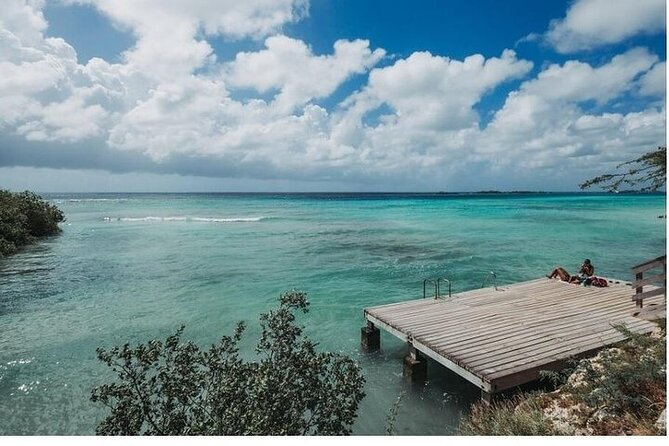
Your first lessons take place out of the water. You watch a roughly 20-minute safety video, read the PADI program booklet, and take a quiz. You also receive a certificate of completion after finishing the program.
This might sound like paperwork before the fun begins, but it has a useful purpose. Scuba equipment feels unfamiliar at first, and the basic rules are not the sort of thing you want explained while already trying to breathe underwater. The opening lesson gives you a shared set of signals and procedures before you put on the gear.
Expect the pace to be practical rather than academic. The aim is to prepare you for this supervised session, not to turn you into a certified scuba user in one morning.
If you have not used scuba equipment before, pay close attention to the sections about breathing steadily and equalizing pressure. Several sessions included people who needed extra time to feel comfortable, and patient instructors brought them along slowly rather than rushing them.
Shallow water is where confidence begins
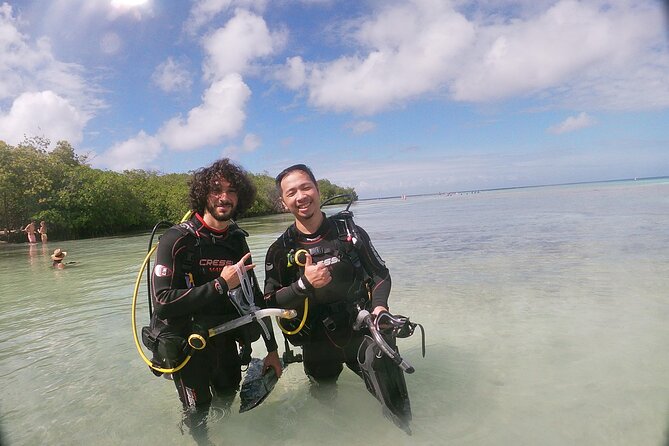
After the land lesson, you practice in shallow water. This is the most important part of the session for many beginners because it gives you a chance to get used to the mask, regulator, buoyancy gear, and breathing pattern without immediately facing deeper water.
Your instructor works through the required skills and watches how you respond. You may need to clear a mask, manage the regulator, or equalize your ears. If something feels wrong, this is the right moment to stop, ask questions, and repeat the exercise.
I like the structure here. A strong first scuba experience is less about covering distance and more about feeling calm enough to make sensible choices. Carlos, Javier, Sebastian, Gio, and other instructors have been singled out for patient explanations and steady supervision, which is exactly what a first session needs.
One participant with long-ago PADI training used this portion as a refresher before pursuing certification. That makes the program useful for two groups: complete beginners and people who studied scuba in the past but never completed an open-water course.
Mangel Halto Reef and the first open-water session
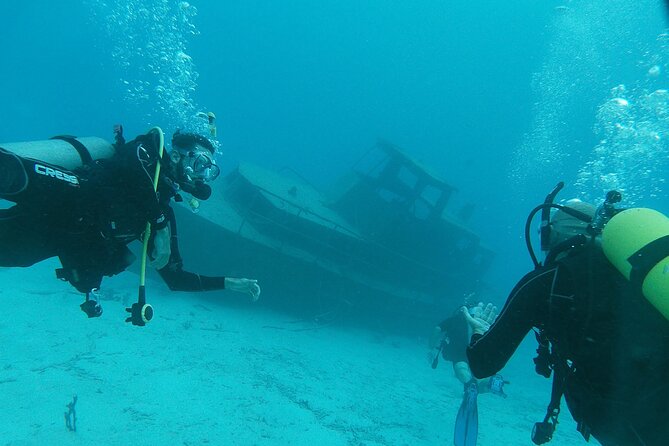
Once you and your instructor are satisfied with the shallow-water work, you head into the larger water at Mangel Halto Reef. This is the payoff, but it is still a supervised lesson rather than a free-form underwater outing.
The reef area offers coral and fish, and some sessions include a shipwreck site. One account describes an underwater visit lasting about 45 minutes, with marine life and wreck views along the route. The exact experience can vary with conditions, comfort level, and how the group progresses through the earlier skills.
Expect your instructor to stay close and point out sea life as you go. Some instructors also use a GoPro to record underwater video, but you should not treat photos or video as guaranteed. One person specifically had enjoyed footage from the session, while another booking dispute involved uncertainty over camera availability.
The reef is a good setting for a first attempt because the program combines scenery with instruction. You are not simply practicing in a pool and then calling it a day. You get to see why people become interested in scuba in the first place, while still having direct help nearby.
More scuba diving off Aruba:
- Private First-Time Dive on Aruba’s Reef and Wreck Site
★ 5.0 · 192 reviews - Aruba Certified Scuba Diving
★ 5.0 · 182 reviews - Half-Day Aruba Intro Diving Course for Beginners
★ 4.5 · 97 reviews - Aruba 2-Tank Guided Dive for Certified Divers / rental equipment
★ 4.5 · 70 reviews
The four-person limit makes a real difference
The maximum group size is four people. That is one of the strongest reasons to choose this experience over a cheaper, larger boat outing.
With a small group, an instructor can watch individual breathing, buoyancy, and comfort. If one person has trouble equalizing or decides to stop, the instructor can respond quickly. A participant whose partner wanted to end the session was brought back in promptly, rather than being pushed to continue.
This setup is also useful for families. A 16-year-old joined two adults in one session, and first-time family groups have been guided through the skills together. Still, you should think about each person’s comfort level rather than assuming everyone in your party will enjoy the same amount of time underwater.
The small group does not mean the session will be private. Four people, equipment handling, transport, and instruction can still create waiting time. One account praised the actual scuba portion but criticized the organization before returning to the meeting point.
Equipment, refreshments, and transport
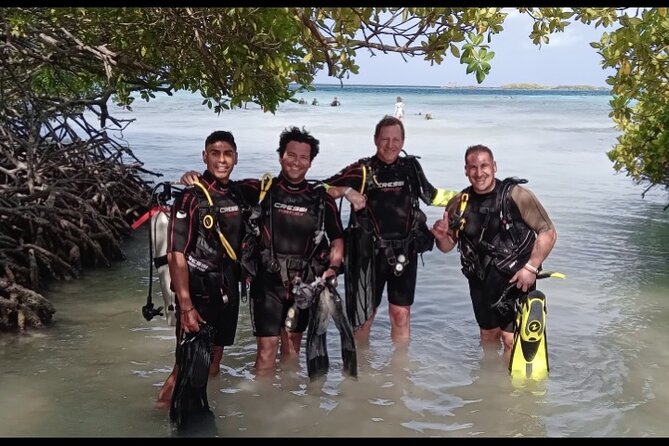
All required scuba equipment is supplied. That saves you from renting items separately and makes the $99 price easier to assess. You should still expect to handle your own personal basics, such as swimwear and any belongings you bring, but the supplied gear covers the central needs of the session.
Water and small snacks, including bananas or chocolate, are provided. These are modest touches, yet they matter after a land lesson, equipment setup, and time in the water.
You can meet at Ir. Luymesstraat 3 in Savaneta, or request pickup if that option is arranged for your booking. The activity ends back at the meeting point. Pickup has also been arranged from the cruise terminal, but the exact meeting instructions have caused confusion for some people.
If you are coming from a cruise ship, confirm the pickup point and time before the day of the session. Do not rely on a vague promise of meeting somewhere near the port. One cruise passenger had difficulty getting clear location details until the day before, though the driver was helpful once contact was made.
There have also been mixed expectations about drop-off. A driver returned one group to the cruise port rather than a different beach location they thought had been discussed. I would treat the listed meeting point as your planned end point unless another arrangement is confirmed in writing.
How the $99 price measures up
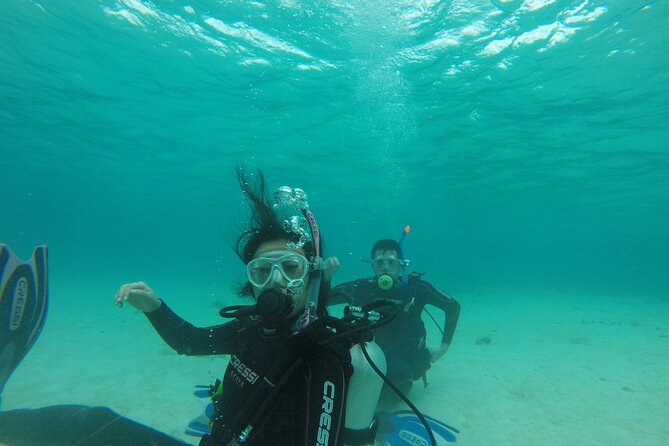
At $99 per person, this is not the cheapest way to spend three hours in Aruba, but it is a reasonable price for a supervised first scuba session. Your fee covers instruction, the PADI learning material, equipment, the shallow-water practice, the reef outing, and refreshments.
The four-person limit adds real value. You are paying not only for access to the reef, but also for an instructor who can focus on a small number of beginners. That matters more than a fancy boat or a long route when you are still learning to breathe and move with the equipment.
The value is weaker if your main goal is a long underwater tour. This is a learning program first. The land lesson and skills practice take time, and some of your group may spend less time in the sea than expected.
It is also a poor bargain if you already hold a current scuba certification and want a full day of sites. Certified users would normally need a different type of outing. For a first attempt, a refresher, or a test before committing to certification, the price makes better sense.
The instructors are the heart of the experience
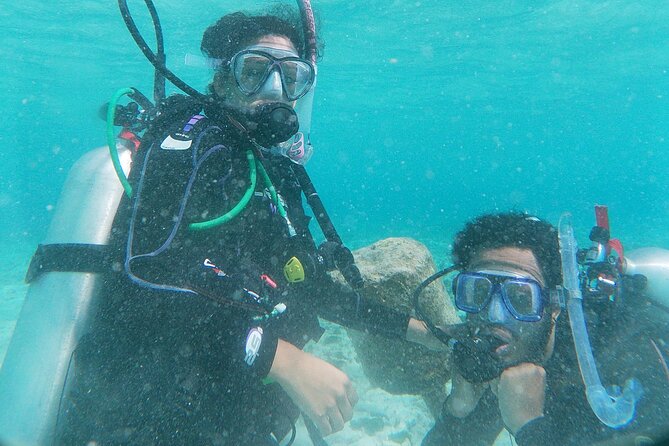
The strongest pattern here is the attention given by the instructors. Carlos is repeatedly praised for calm explanations and careful support. Javier is described as attentive and especially good at helping nervous beginners. Sebastian is credited with making difficult steps easier to understand, while Gio is praised for keeping a first-time participant steady and relaxed.
Those details matter because scuba can feel strange in the first few minutes. You may know the rules on land and still feel anxious once the mask is on and the regulator is in your mouth.
The instruction appears to be flexible enough to handle mixed experience levels. People who had never used scuba, people returning after many years, and family groups have all been accommodated. One older participant, aged 72, completed the experience and left interested in making scuba a new hobby.
That said, good instruction cannot remove every physical challenge. You need a moderate fitness level, and you must be willing to communicate clearly if you are uncomfortable. The program is marketed to non-certified participants, but do not assume that means no swimming ability or total ease in the water is unnecessary. If you are a non-swimmer, contact the provider before paying.
Allow extra time for organization
The underwater portion receives the best marks, but the day may not run with clockwork precision. Equipment organization, video viewing, transfers between vehicles, and the return trip can take longer than expected.
One person felt the group waited too long at the end and missed another planned activity. That is an important warning for anyone trying to fit this around a cruise departure, dinner reservation, or another booked excursion.
Transport may involve more than one vehicle. Another person described belongings being moved between vans, with a shirt briefly misplaced before it was found. Keep valuables to a minimum and make a quick mental note of where your bag and clothing are stored.
Communication around schedule changes also deserves care. A cancellation or change made within 24 hours is not accepted under the stated terms, and no refund is available inside that window. If you need to alter the booking, do it at least 24 hours before the start time and keep the confirmation.
Who should book this Aruba scuba session?
I would recommend it to you if you have always wanted to try scuba but are not ready to commit to a full certification course. The reef setting, limited group size, supplied equipment, and patient instruction make it a sensible first step.
It also suits someone who completed scuba lessons years ago but never finished the open-water portion. The land and shallow-water work can refresh the basics before you decide whether to continue with certification.
Families and couples can enjoy it together, provided everyone has a reasonable comfort level in the water. The program is not designed for someone who wants to sit back while an instructor does everything. You need to listen, practice, and signal honestly when you need help.
I would choose another activity if you dislike structured lessons, have very limited time in Aruba, or need a guaranteed private session. I would also avoid booking it without first discussing your situation if you are not comfortable swimming or have concerns about the physical demands.
Should you book it?
Book this program if you want a careful, small-group introduction to scuba at Mangel Halto Reef. The best features are the four-person cap, direct supervision, full equipment, and instructors who take time with nervous beginners.
Go in with realistic expectations. This is not certification, not a guaranteed photography session, and not necessarily a perfectly timed three-hour outing. Confirm pickup details, allow extra time afterward, and make sure everyone in your party is physically ready for a supervised underwater session.
For $99, I think it offers good value for a first attempt, especially if the experience helps you decide to pursue a full PADI course later.
FAQ
Is this a scuba certification course?
No. It is a PADI Discover Scuba Diving program and includes an introduction, basic skills, and a supervised reef session. It does not provide an open-water scuba certification.
How long does the experience last?
The program usually lasts about three to four hours, with the listed duration given as approximately three hours.
Where does the activity begin?
The meeting point is Ir. Luymesstraat 3 in Savaneta, Aruba. Pickup may be available if arranged for your booking.
Where does the activity end?
The activity ends back at the meeting point.
How many people are in each group?
The maximum group size is four people.
Is scuba equipment provided?
Yes. The scuba equipment is provided as part of the experience.
What happens during the program?
You watch a roughly 20-minute video, read the PADI program booklet, take a quiz, practice skills in shallow water, and then take part in a supervised session at Mangel Halto Reef. Water and small snacks such as bananas or chocolate are also provided.
Just added around Aruba
- Private Tour: Essential Tour of Aruba★ 5.0 · 68 reviews
- UTV Island Tour around Aruba★ 5.0 · 175 reviews
- UTV and Jeep Island Adventure Mix Up★ 5.0 · 73 reviews
- The Whole Story Tour + A Ride★ 5.0 · 141 reviews
- Arubabound Transfers★ 5.0 · 31 reviews
- Made in Aruba Sightseeing Tour★ 5.0 · 252 reviews
- Aruba Private Luxury Boat Tours – Sail, Snorkel, Fishing and More★ 4.5 · 81 reviews
- Private nature tour: Aruba’s highest point & pristine coral reef★ 5.0 · 107 reviews
Scuba Diving, compared.
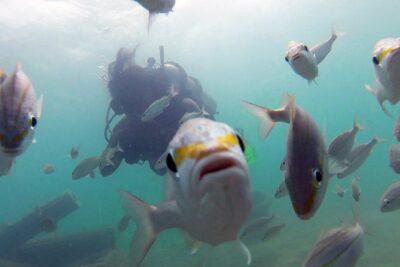
Beginner Scuba Diving with Turtles and Videos, San Juan
Read our review →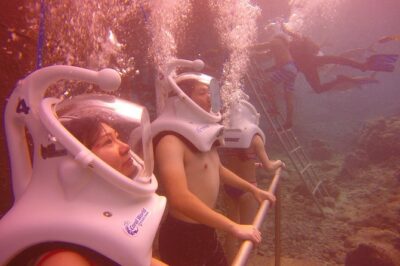
Sea Trek Helmet Dive at Coral World Ocean Park
Read our review →
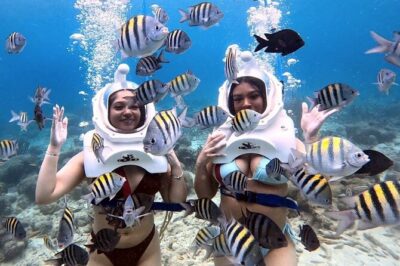
Curacao Helmet Diving-Walk the Ocean Floor, No Swimming Required
Read our review →
Two-Tank Morning Dive Trip for Certified Divers
Read our review →
Two-Tank Dive for Certified Diving in St Thomas
Read our review →
Scuba Doo Diving Experience in Punta Cana
Read our review →Browse the lists this tour appears in