
Reviewed · WALKING TOURS
Santo Domingo: Colonial Zone Walking Tour with Tastings
The best part of this tour is the way it links Santo Domingo’s old streets with the flavors and crafts of modern Dominican life. You’ll move from the Catedral and Calle de las Damas to tea, chocolate, Mamajuana, Larimar jewelry, and Dominican rum in about two hours. The history and tastings work well together, giving you more than a monument-by-monument walk.
I like the small cultural details, especially the story behind Larimar, a blue stone found only in the Dominican Republic. I also like the price: at $20, the tour includes a certified local guide, several tastings, a workshop visit, and admission to the Rum Museum. The main limitation is time. Two hours goes quickly, so the sightseeing is guided and brisk rather than a slow, detailed visit inside every historic building.
Key points
- Three local tastings: Try tea, chocolate, and Mamajuana, then sample Dominican rum at the Rum Museum.
- Larimar workshop visit: See where the Dominican Republic’s distinctive blue stone becomes jewelry.
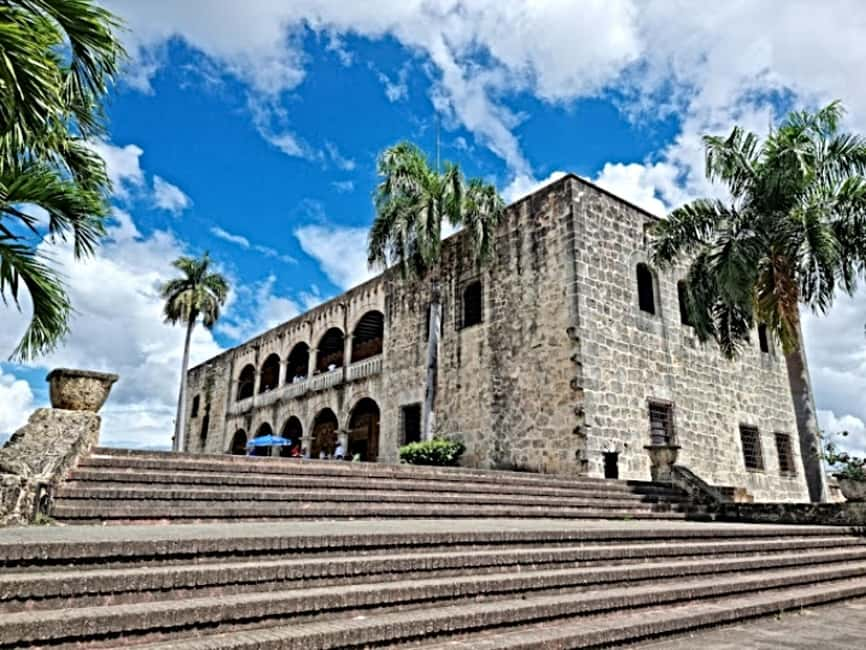
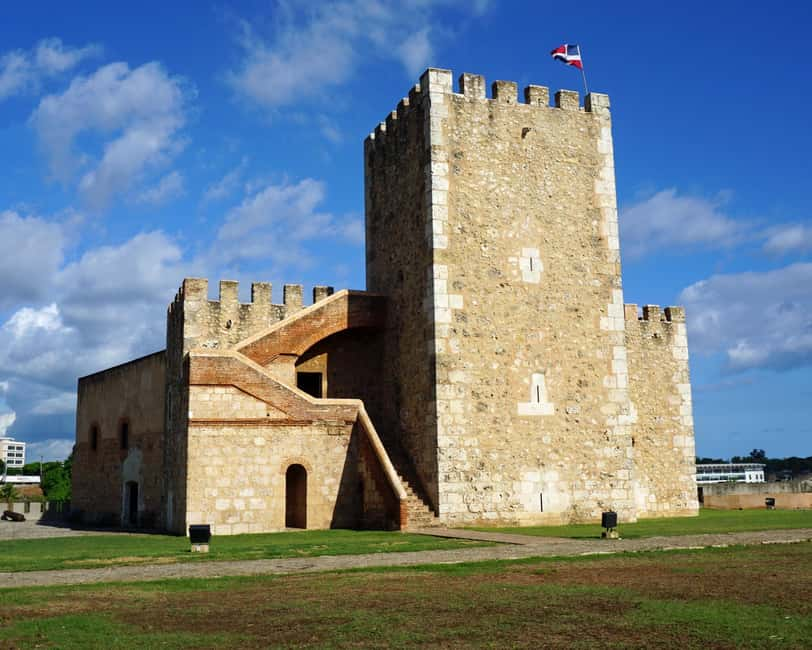
- Historic center route: Walk past Alcázar de Colón, Calle de las Damas, Parque Colón, and the first cathedral in the Americas.
- Useful price: The $20 fee includes the guide, tastings, workshop, and Rum Museum entrance.
- Language choice: Tours are offered in English, Spanish, and French.
- Guide personality matters: Medina is specifically praised for bringing energy, humor, and close attention to small details when available.
Starting beside Santo Domingo’s oldest streets
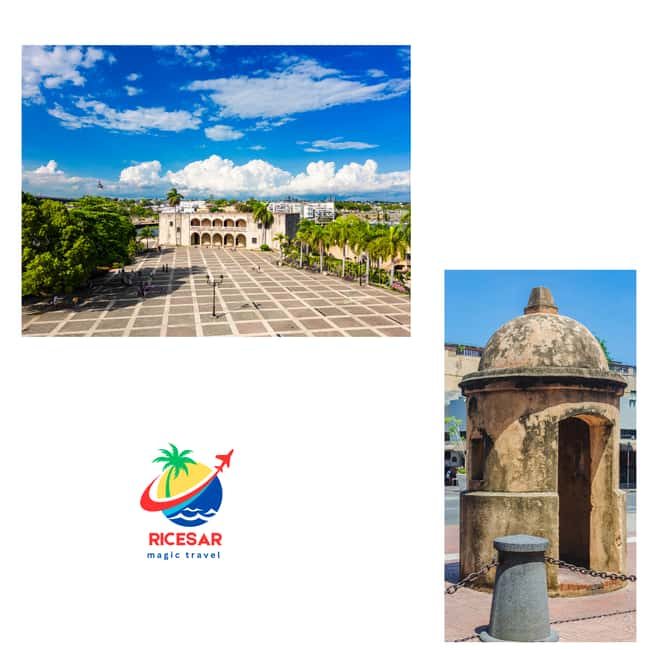
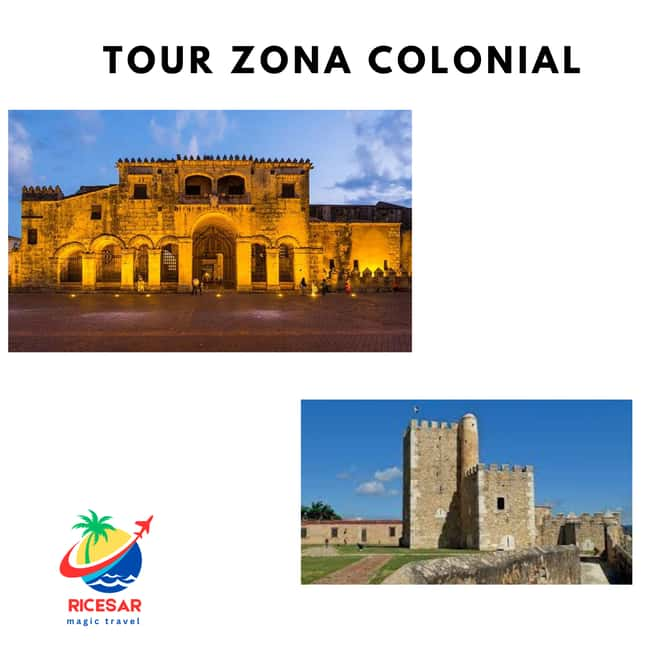
You begin near the Museo de las Casas Reales or the Fortress of Columbus, depending on the option you book. These meeting points put you right in the Colonial Zone, so you avoid wasting part of a short tour on a long transfer from a hotel.
The setting matters. Santo Domingo’s Colonial City is a UNESCO World Heritage Site, and its streets bring together major monuments, plazas, shops, and everyday city life. You are not being taken to an isolated historical park. You are walking through a living district where old stone buildings share space with cafés, stores, museums, and local businesses.
The tour returns to one of the same two areas at the end. That makes the route practical if you are already sightseeing in the Colonial Zone before or after the walk. Hotel pickup and drop-off are not included, so plan your own way to the starting point.
More walking tours in Santo Domingo:
- Walking Tour from Santo Domingo City
★ 4.5 · 167 reviews - Bites of Nassau Food and Walking Tour
★ 5.0 · 3,168 reviews - Old San Juan Walking Tour
★ 5.0 · 2,211 reviews
Alcázar de Colón and the first glimpse of the Colonial City
The route includes the Alcázar de Colón, with about 10 minutes set aside for a guided visit. This is a useful opening stop because it gives you a sense of the district’s Spanish colonial past before you move into the streets.
Ten minutes is enough for an introduction and some context, not an in-depth museum visit. If you want to study every room or display, you will need to return on your own. The value here is orientation: your guide can point out what you are seeing and connect the building to the wider story of the Colonial Zone.
That short format is typical of this activity. You get a series of focused stops instead of one long indoor tour. I would choose this approach if you want an overview on your first day in Santo Domingo, especially if you plan to explore the museums at greater length later.
A one-hour walk through the Colonial Zone
The main guided walk lasts about an hour. This is the heart of the experience, and it covers several of the city’s most recognizable places.
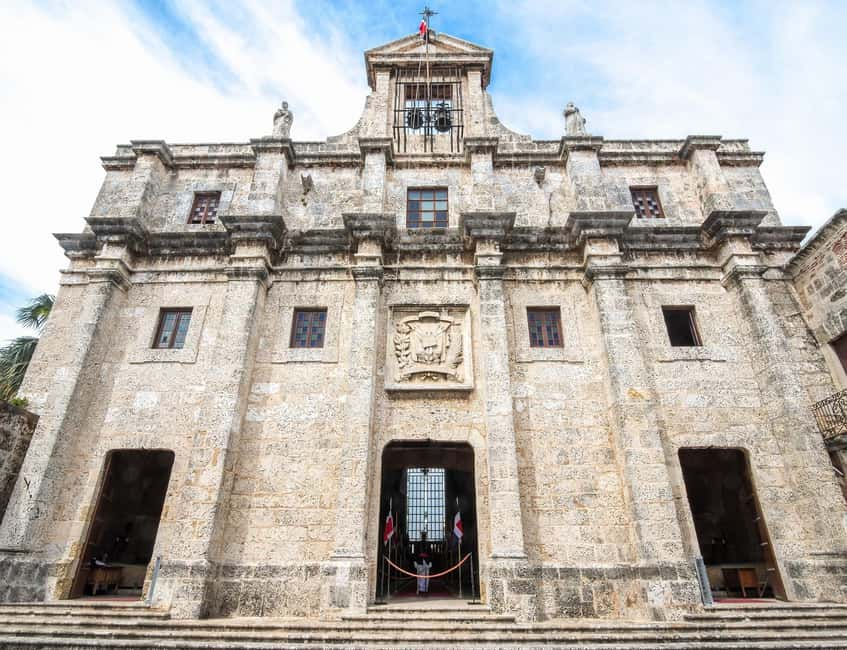
You pass along Calle de las Damas, one of the notable streets in the historic center, then continue toward the Museum of the Royal House. A short guided stop there adds another piece of the colonial story. You also visit Calle El Conde, a well-known pedestrian shopping street, where the atmosphere shifts from formal monuments to shops and daily city life.
I like this contrast. A purely historical walk can feel sealed off from the present, but this route shows how the old center functions now. You get architecture and civic history, then a street where you can browse, take photos, and see the district in use.
The pace may feel fast if you prefer long photo stops. The listed timing gives roughly 10 minutes at several locations, so you should expect concise explanations and movement between points. Ask your guide questions as you go, since the two-hour schedule does not leave much spare time at the end.
Parque Colón and the Catedral Primada de América
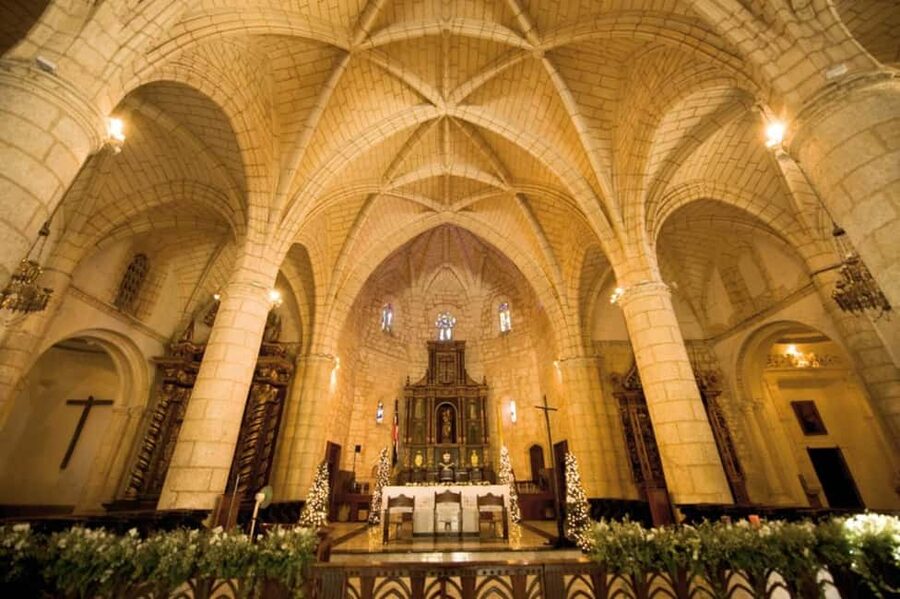
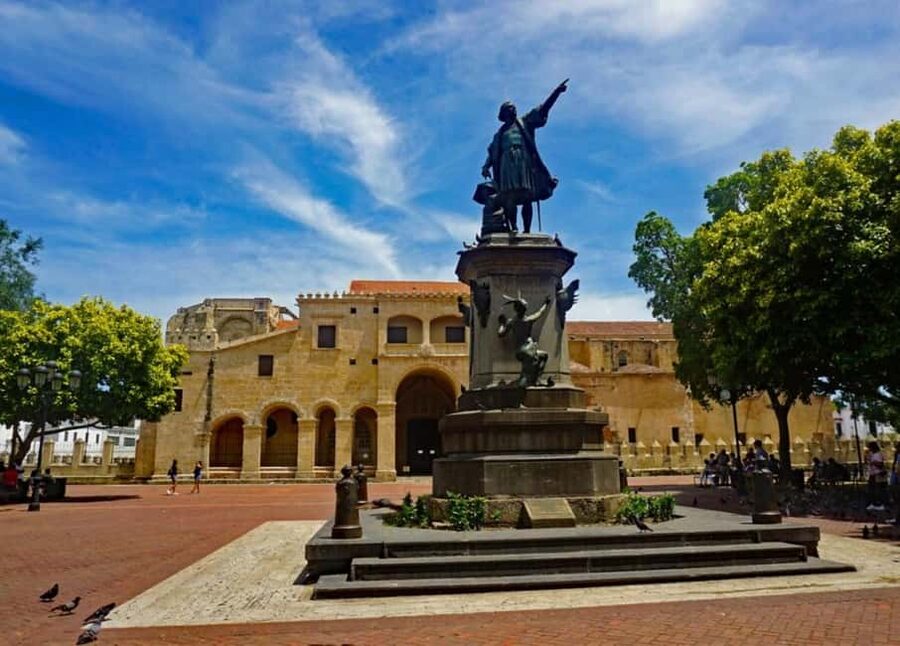
Parque Colón provides another short stop, followed by the Catedral Primada de América. The cathedral is one of the essential sights in the Colonial Zone, and the guided portion lasts about 10 minutes.
The cathedral adds weight to the walking route because it is not simply another attractive building. It helps explain why Santo Domingo holds such an important place in the history of the Americas. Your guide gives you the basic setting and points out what makes the site significant, while the surrounding square gives you a chance to take in the urban scene.
Again, keep your expectations in line with the schedule. This is a guided look, not a long architectural study or a full religious-art tour. If the cathedral is high on your list, note what you want to inspect and return later if time and opening conditions allow.
The route also includes a photo stop and shopping time in Ciudad Colonial. That is a practical addition. You can take pictures, browse local goods, and get a feel for the area without turning the whole tour into a shopping trip.
A few more Santo Domingo days to weigh up
- Full-Day Santo Domingo City Tour from Punta Cana
★ 4.5 · 4,500 reviews - Day Trip to Santo Domingo from Punta Cana
★ 3.5 · 659 reviews - Punta Cana: Santo Domingo Day Trip with Tickets and Lunch
★ 3.8 · 584 reviews - Punta Cana: All Inclusive Santo Domingo Full-Day City Tour
★ 4.1 · 553 reviews
Tea, chocolate, and Mamajuana in one stop
One of the more distinctive parts of the walk is the tasting of tea, chocolate, and Mamajuana. These are not interchangeable samples. Together, they introduce different parts of Dominican food and drink culture.
Chocolate gives you a familiar starting point, while the tea adds another local flavor to the stop. Mamajuana is the most unusual tasting for many people. The tour uses the drink as a chance to explain its cultural importance rather than treating it as a quick novelty.
I like this pause because it breaks up the walking and gives the guide room to explain traditions in a relaxed setting. It also adds value to the $20 price. A standard monument walk may tell you where buildings are, but this tour gives you something to taste and a reason to discuss how people connect food and drink with place.
The included tasting is limited to the listed items. Extra food or drinks are not included, so budget separately if you want more. The descriptions do not specify serving sizes, which means you should think of this as a sample stop rather than a meal.
Larimar, the Dominican Republic’s blue stone
The Larimar workshop is one of the tour’s strongest features. Larimar is a rare blue stone found only in the Dominican Republic, and the visit explains its history, local myths, and use in jewelry.
You can see the stone in a practical context here. Rather than only admiring a finished necklace or bracelet in a shop window, you learn how artisans turn the raw material into jewelry. That makes the purchase decision clearer if you are considering a souvenir.
The workshop is also a good reminder that the Colonial Zone is not only about European-era buildings. The tour connects the historic center with a national craft and a material tied specifically to the Dominican Republic.
There is a catch, and it is worth stating plainly: personal purchases at the Larimar shop are not included. You are free to browse, but you should not feel that buying jewelry is part of the tour requirement. If you do shop, compare items carefully and treat the visit as both a craft stop and a retail opportunity.
Dominican rum at the Rum Museum
The final major stop is the Rum Museum. Here you learn how Dominican rum is produced and enjoy a tasting session. This gives the tour a clear ending, moving from the city’s early monuments to one of the country’s best-known exports.
The museum visit adds context that a bar tasting would not provide. You get an explanation of production before sampling the drink, so the tasting has a stronger sense of place. For anyone interested in Caribbean spirits, this is likely to be the most appealing part of the final section.
As with the other stops, the schedule is compact. The full activity lasts two hours, and the Rum Museum is only one part of that time. You should expect an introduction to rum production and a tasting, not an extended museum course.
Alcohol is included in the rum tasting, so consider that when planning the rest of your day. The tour also includes Mamajuana earlier, making it wise to keep the pace comfortable and avoid treating each sample as a full drink.
What the $20 price really covers
At $20 per person, this is good value if you want a broad introduction rather than a deep visit to one museum. The fee includes:
- A certified local guide
- A walking tour of the Colonial Zone
- Tea, chocolate, and Mamajuana tasting
- A Larimar workshop visit
- Entrance to the Rum Museum
- A Dominican rum tasting
That is a lot of variety for a two-hour activity. You get monuments, streets, local products, craft, and rum without paying separate admission for the Rum Museum.
The price is less compelling if you only want a slow architectural tour. The tastings and workshop are central to the format, and some of the historic stops are brief. You are paying for a compact mix of experiences, not a private museum lecture.
There is no hotel pickup or drop-off. Since both meeting and return points are in the Colonial Zone, this is not a major problem if you are staying or sightseeing nearby. It does mean you should allow time to find the correct starting point, especially because the meeting location can vary according to the option booked.
The guide can shape the whole walk
The experience is offered in English, Spanish, and French, with a live guide. That language choice is important in a tour built around stories, food, myths, and cultural details. You will get more from the stops if you can ask questions and follow the explanations comfortably.
One guide specifically praised in the available feedback is Medina. His strengths are described as humor, energy, friendliness, and an ability to point out small details rather than simply recite dates. If Medina is assigned to your departure, you may find the tour especially engaging, but guide assignments can vary, so do not book on the assumption that a particular person is guaranteed.
The best way to use a guide-led walk like this is to stay curious. Ask about the meaning of Mamajuana, how Larimar is worked, and what you should notice at the cathedral or along Calle de las Damas. The more specific your questions, the more useful a short tour can become.
Who should book this experience
I would choose this tour if you have only a few hours in Santo Domingo and want a first look at the Colonial Zone. It suits someone who likes a mix of history, local products, shopping, and tasting stops rather than a single subject.
It also works well for a first afternoon in the city. The walk can help you learn the layout of the historic center, after which you can return to the cathedral, museums, plazas, or shops that caught your attention.
Families and mixed-interest groups may appreciate the changing pace. A monument appears, then a tasting, then a craft workshop, then rum. That variety can be easier to enjoy than two straight hours of architecture.
You may want a different option if you need wheelchair-specific information, extended museum time, or a long food-focused outing. The supplied details do not specify accessibility, group size, or serving amounts, so ask before booking if any of those points are essential.
Practical details before you reserve
The activity lasts two hours, and starting times depend on availability. Cancellation is free up to 24 hours before the tour for a full refund. You can also reserve now and pay later, which helps if your Santo Domingo schedule is still changing.
Wear comfortable walking shoes. The activity is on foot and includes several streets, plazas, and short stops. Bring water for the walk, though extra drinks and food are not included.
Confirm the meeting point on your booking because the starting choice may be the Fortress of Columbus or the Museo de las Casas Reales. The listed coordinates are 18.477511550641776, -69.88274976611137, but the exact meeting arrangement can vary.
Should you book the Colonial Zone tasting walk?
Book it if you want an affordable, lively introduction to Santo Domingo that combines major sights with local tastes. The Larimar workshop and the tea, chocolate, and Mamajuana stop give it more character than a basic city walk, while the Rum Museum adds a clear local specialty at the end.
Skip it if your priority is detailed access to every monument or a relaxed museum visit. The schedule is tight, and the tour gives you short guided stops rather than long periods inside each attraction.
For $20, I think the balance is favorable. You get a certified local guide, a UNESCO-listed historic district, several tastings, a craft visit, and rum museum admission in one compact route. Just arrive ready to walk, keep your shopping budget separate, and treat the tour as an introduction that helps you decide where to spend more time later.
FAQ
How long does the Santo Domingo Colonial Zone tour last?
The tour lasts two hours.
How much does the tour cost?
The price is $20 per person.
What tastings are included?
The tour includes tea, chocolate, and Mamajuana tastings, plus a Dominican rum tasting at the Rum Museum.
Which sights are included in the walking route?
The route includes Alcázar de Colón, the Colonial Zone, the Museum of the Royal House, Calle El Conde, Parque Colón, the Catedral Primada de América, and Ciudad Colonial.
Does the tour visit a Larimar workshop?
Yes. The tour includes a visit to a Larimar workshop or factory, where you learn about the stone and its use in jewelry.
Is the Rum Museum entrance included?
Yes. Admission to the Rum Museum and a rum tasting are included.
What languages are available?
The live tour guide is available in English, Spanish, and French.
Is hotel pickup and drop-off included?
No. Hotel pickup and drop-off are not included. The meeting and return points are near the Museo de las Casas Reales or the Fortress of Columbus, depending on the option booked.
Can I cancel the tour for a refund?
Yes. You can cancel up to 24 hours in advance for a full refund. You can also reserve now and pay later.
Just added around Santo Domingo
- Full-Day Guided Tour in santo Domingo★ 4.5 · 58 reviews
- Saona Island Full-Day All-Inclusive Tour from Santo Domingo★ 4.0 · 37 reviews
- Saona island full day tours – catamarán party from santo domingo★ 4.0 · 36 reviews
- Santo Domingo must do; Los 3 Ojos, Boca Chica beach & more★ 5.0 · 56 reviews
- Saona Island Tour From Santo Domingo with Lunch and Pickup★ 4.2 · 60 reviews
- Santo Domingo: The Authentic Dominican Neighborhood Tour★ 4.8 · 68 reviews
- Santo Domingo: Three Eyes National Park Guided Tour★ 4.0 · 41 reviews
- Santo Domingo: Historical City Tour★ 4.9 · 42 reviews
Walking Tours, compared.

Bites of Nassau Food and Walking Tour
Read our review →
Rum Tasting and Food Walking Tour in Nassau Bahamas
Read our review →
Curacao Helmet Diving-Walk the Ocean Floor, No Swimming Required
Read our review →
Flavors of St Thomas Walking Food Tour
Read our review →
Historic Old San Juan Sunset Walking Tour
Read our review →Browse the lists this tour appears in