
Reviewed · WORKSHOPS
Private Windsurfing Lessons in Aruba
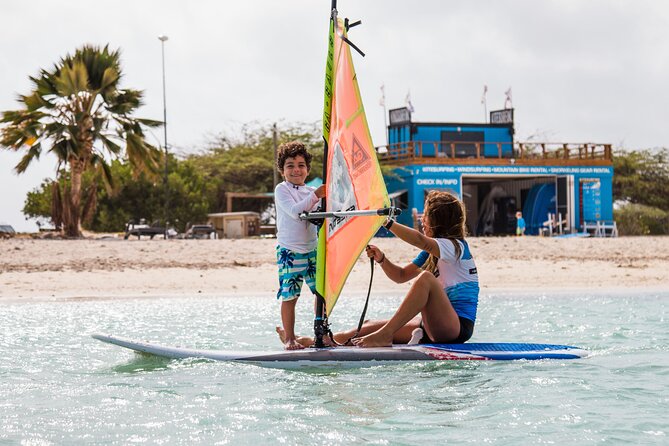
Aruba’s trade winds make this private windsurfing lesson a smart way to try a water sport without being lost in a large class. You start on the beach with a clear demonstration, then move through short practice sessions before spending the second hour steering under supervision. I like the one-to-two-person format, and I like that you get the board, sail, watershoes, freshwater shower, Wi-Fi, chairs, and hammocks for $90 per person.
The main catch is that the quality of the lesson depends heavily on your instructor and how closely you need to be coached. Some instructors, including Luis, Ramon, Alfredo, and Rudolph, have been praised for patience and clear teaching, while one account describes an instructor moving too quickly and leaving the student to practice alone. The water can also become crowded later in the day.
Key points to know before booking
- Private format: One or two people share the lesson, making it a good fit for couples or a parent and child.
- Two-part teaching plan: The first hour combines beach instruction and short practice sessions; the second gives you supervised time on the water.
- Useful equipment included: Windsurf gear and watershoes are supplied, with life jackets available on request.
- Fisherman’s Huts setting: The school is at Aruba Active Vacations, Rooi Santo 28, in Noord.
- Beach time after class: You can use the freshwater shower, Wi-Fi, beach chairs, and hammocks when the lesson ends.
- Pickup costs extra: Hotel or cruise-terminal pickup may be available, but the stated fee is an additional $5.
Learning to read Aruba’s trade winds
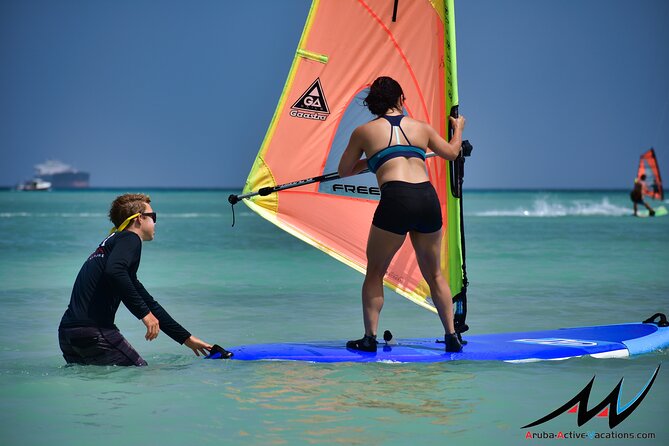
The best part of this activity is that you do not simply get pushed onto a board and told to figure it out. The lesson starts with the basic parts of the rig: the sail, boom, mast, and board. Your instructor explains how the wind affects the sail and how your hands, feet, and body position work together.
That introduction matters. Windsurfing looks simple from shore, but the sail reacts quickly when the wind catches it. A short beach demonstration gives you a picture of what you are trying to do before you have to balance on a moving board.
The instructor then breaks the skill into small pieces. You learn how to hold the sail, place your feet, use your hands, and turn, or tack. The teaching method mixes explanation with practice, so you are not stuck listening to a long lecture in the heat.
I like this approach for first-timers. You get a chance to try each movement, make a mistake, and then hear the next correction while the lesson is still fresh. Several instructors have earned praise for this patient style. Rudolph is described as kind and reassuring during repeated wipeouts, while Ramon is noted for being both patient and funny. Luis is credited with building the skills one step at a time.
Your instructor may be Luis, Ramon, Alfredo, Rudolph, Shamar, or another member of the team. Since the instructor is not guaranteed in advance by the information provided, you should treat the names as examples rather than a promise. If you have a strong preference, ask when booking.
More watersports in Aruba:
- Aruba Flyboarding & Jetovator Experience: Fly Like a Bird & Dive Like a Dolphin
★ 4.5 · 64 reviews - Bonaire Landsailing Adventures
★ 5.0 · 652 reviews - Luquillo, Puerto Rico: Beginners Surf Lesson
★ 5.0 · 265 reviews
What the two-hour lesson actually looks like
Plan on about two hours from start to finish. Once you arrive, you remove flip-flops and heavy or warm clothing. You complete the required paperwork, store your belongings in lockers, and get ready for the beach.
Watershoes are supplied, which is a useful detail because many people do not think to pack them for a windsurfing lesson. Fit may take a little sorting, so wear something easy to adjust and allow a few extra minutes before the scheduled start.
A life jacket is available if you request one, though the operator does not recommend it for this lesson. That choice may depend on your comfort in the water, so mention your preference before getting on the board.
The first phase takes place on the beach and in short practice sessions. You learn the names and purpose of the equipment, then work on holding the sail and finding the right foot and hand positions. You also practice turning and controlling direction.
The lesson is not a rigid classroom session. The wind itself teaches you what happens when you pull, release, or shift the sail. That hands-on feedback is one reason a private lesson can be more useful than a crowded group class.
During the second hour, you practice on your own while the instructor supervises. This gives you time to repeat the movements without having someone physically direct every second. If you need help, the instructor is available.
That independent hour is a plus for people who learn by doing. It is also the point where the lesson may feel less personal if you need constant guidance. One account describes an instructor leaving the student to practice too early, so tell your instructor clearly if you want more corrections or closer supervision.
Why private instruction helps couples
The class is limited to one or two people. For a couple, that means you can learn together without being mixed into a large group moving at different speeds. You can share the experience, compare your progress, and spend the beach time afterward together.
The format also makes it easier to speak up. If you are nervous, struggling with balance, or unsure how to steer, you do not have to compete with a full class for attention. If both people are beginners, the instructor can set a common pace.
There is one tradeoff. A private lesson does not guarantee nonstop one-on-one instruction. You still need to practice independently, especially during the second hour. If one person learns much faster than the other, the slower student should ask for additional help rather than quietly falling behind.
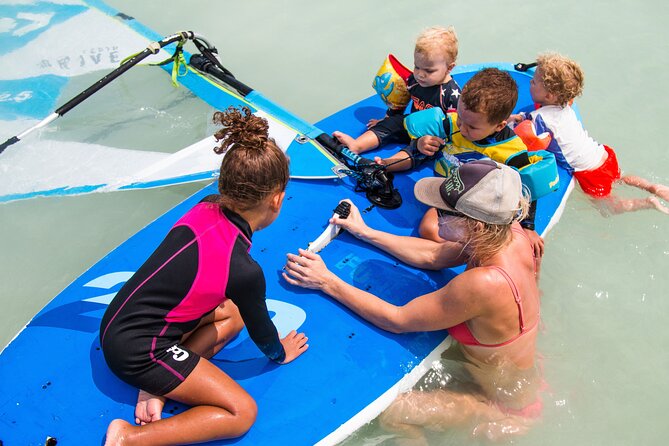
The activity has also worked for families. Children aged 11 and 13 have taken part, according to the supplied information, and enjoyed learning. The operator requires a moderate level of physical fitness, so this is not a passive beach outing. You should be comfortable with repeated movement, balance work, and getting wet.
The Fisherman’s Huts beach setting
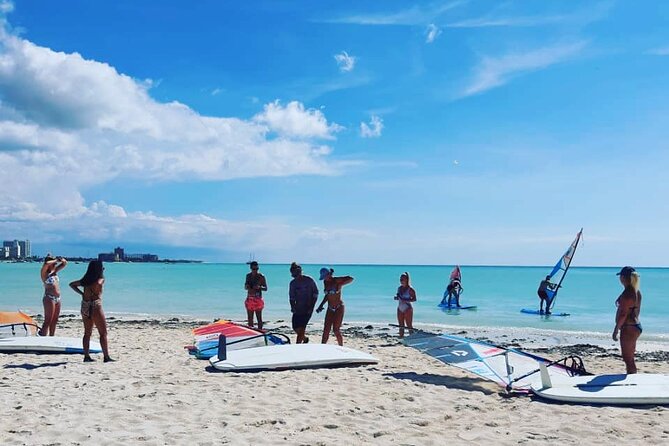
The meeting point is Aruba Active Vacations at Rooi Santo 28, near Fisherman’s Huts beach in Noord. The activity ends back at this same meeting point.
The setting gives you more than a lesson and a quick departure. Beach chairs and hammocks are available for relaxing before or after your time on the water. A freshwater shower lets you rinse away salt, and Wi-Fi is included if you need to check messages or arrange your next stop.
There is no bathroom listed among the facilities, so plan accordingly. Storage is available in lockers or in a secure area behind the counter, but you should still bring only what you need. Leave heavy, warm items at the school rather than taking them onto the beach.
The area may feel crowded later in the day. One particularly useful tip is to book an early morning time if you want more open water at the beginning of your lesson. An early start can also make the learning process feel calmer before more people arrive.
Sun protection matters. One student found regular sunscreen insufficient and recommended a sun shirt. You will be exposed to sun while standing on the beach, balancing on the board, and practicing in the water. A rash guard or long-sleeved swim shirt is a practical choice.
More workshops in Aruba:
- Mixology Class at Casa BACARDÍ in Puerto Rico
★ 5.0 · 1,469 reviews - Mount Gay Cocktail Workshop
★ 5.0 · 213 reviews - Santo Domingo: Chocolate Tour + Optional Workshops
★ 4.5 · 60 reviews - Wine Maker Class at Bahama Barrels
★ 4.5 · 57 reviews
Equipment, safety, and the learning curve
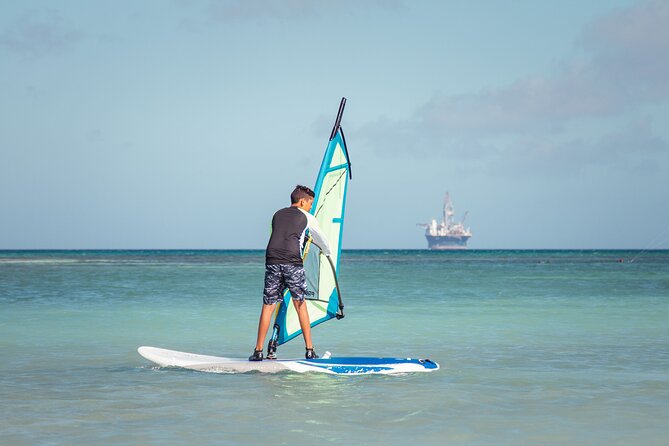
The school supplies the windsurfing equipment, including the board and sail. You also receive watershoes, and a life jacket is available if requested. This keeps the activity fairly simple to pack for. Bring swimwear, sun protection, and a change of clothes rather than trying to transport a full set of water-sport equipment.
Windsurfing has a steep first few minutes. You may spend time climbing back onto the board, losing control of the sail, or drifting off your intended line. That is normal for a first lesson, and the instructors are expected to keep you within a manageable area.
Alfredo has been praised for explaining the process from start to finish, giving useful corrections, and showing a safer way to get off the board. That last point is important. You should ask your instructor to demonstrate how to dismount before you begin practicing independently.
The experience requires moderate physical fitness, but the supplied details do not set a specific age, weight, or swimming requirement. If any of those factors affect your booking, contact Aruba Active Vacations before paying. Service animals are allowed, and the location is near public transportation.
The life jacket policy deserves a quick word. It is available on request but not recommended by the operator. If you are not a confident swimmer or feel uneasy without one, raise the issue before the lesson begins and make a choice that suits your comfort.
Timing, transport, and the real price
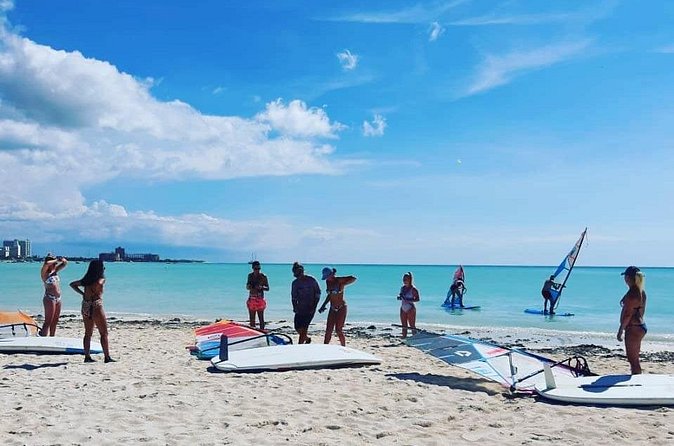
The price is $90 per person. For a two-hour private lesson that includes the instructor, equipment, watershoes, beach chairs, hammocks, Wi-Fi, and a freshwater shower, I consider it a fair price for a first introduction to windsurfing. The private format gives the price more weight than a basic group rental, since you are paying for instruction rather than just time on the water.
A couple pays for two places, so the total is $180 before any pickup charge. That is reasonable if both people intend to participate. It is less appealing if one person plans to watch while the other takes the lesson.
Pickup is offered, but the information is slightly mixed. Private transportation is listed among the inclusions, while hotel or cruise-terminal pickup and drop-off carry an additional $5 charge. Confirm the exact arrangement and total before the day of the lesson.
The activity is booked about 32 days ahead on average. That suggests planning early, especially if you want a morning time or need transport during a short Aruba visit. It is also a good match for a cruise stop, since one booking included transport to and from the cruise terminal in Oranjestad.
Build in enough time for the transfer, paperwork, equipment fitting, and return transport. The lesson itself lasts about two hours, but your full outing will be longer if you use pickup or stay to relax on the beach.
What can make or break the experience
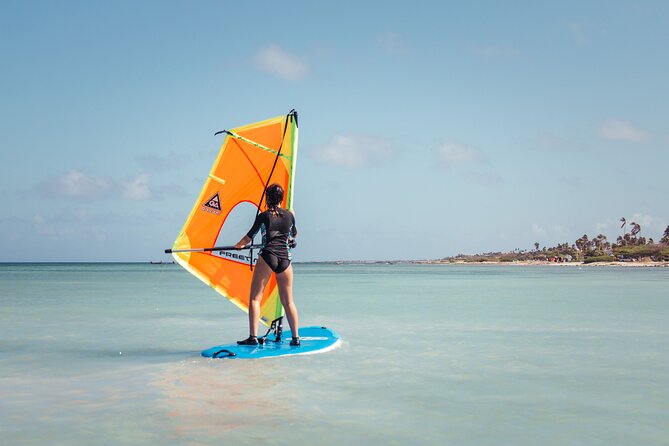
Good instruction is the biggest factor. When the teacher slows down, gives a simple correction, and lets you repeat it, the session can feel rewarding even if you fall often. When the teacher moves too quickly or leaves you alone before you are ready, the same activity can feel frustrating.
You can help by being direct. Tell the instructor if you need the foot placement shown again, if you want help turning, or if you are not ready to practice alone. A private setting gives you room to ask for the type of instruction that works for you.
Crowding is the second concern. The beach and water may become busier as the day goes on, which can make steering harder for a beginner. An early morning booking is the strongest practical tip for a calmer start.
Finally, set the right goal. You may not become a polished windsurfer in two hours. The useful goal is to understand the wind, control the sail, stand on the board, and get a feel for steering. If you leave with those basics, the lesson has done its job.
Who should book this Aruba lesson
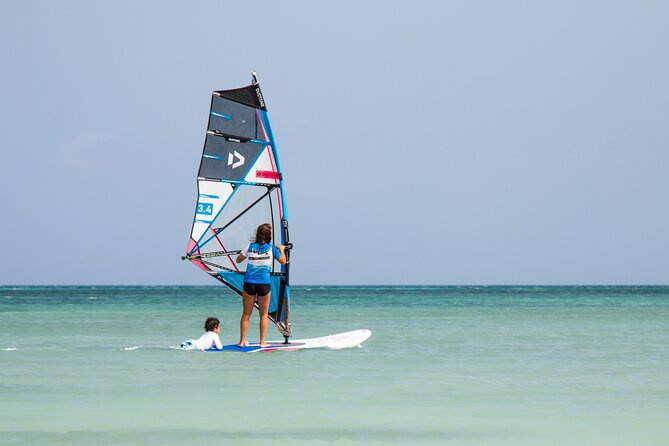
I would choose this activity for a couple who wants to learn the same new skill, a small family group, or a first-timer who prefers personal instruction. It also suits a cruise stop because the lesson is short and transport may be arranged.
You will like it if you want an active beach experience rather than another hour in a lounge chair. The included gear and watershoes make it easy to try without committing to a full day of equipment rental.
I would think twice if you dislike falling in the water, have limited physical fitness, or want a completely quiet beach. This is a hands-on sport, and the water may be crowded later in the day.
Cancellation is free up to 24 hours before the start time. Cancellations or changes made inside that window are not refunded, and poor weather may lead to a new date or a full refund. That policy is worth keeping in mind when planning around a cruise schedule.
Should you book Private Windsurfing Lessons in Aruba?
Book it if you want a focused first lesson, have two hours to spare, and like the idea of practicing rather than watching a demonstration. The one-to-two-person format, included equipment, patient instructors such as Rudolph, Ramon, Luis, and Alfredo, and useful beach facilities give this experience solid value.
Book an early time, bring a sun shirt, and confirm the pickup charge. Most of all, tell your instructor how much help you need. With realistic expectations, this is a lively and memorable way to use Aruba’s trade winds.
FAQ
How long does the private windsurfing lesson last?
The lesson lasts approximately two hours. The first hour combines beach instruction and short practice sessions, while the second hour is for independent practice under supervision.
How many people can join the lesson?
The lesson is private for one or two people. Couples can take the lesson together, and only your group participates.
Where does the activity begin and end?
It begins at Aruba Active Vacations, Rooi Santo 28, near Fisherman’s Huts beach in Noord, Aruba. The activity ends back at the same meeting point.
Is equipment included?
Yes. Windsurfing equipment and watershoes are included. A life jacket is available on request, though it is not recommended by the operator.
Is hotel pickup available?
Pickup is offered, but hotel or cruise-terminal pickup and drop-off cost an additional $5. Confirm the exact transport arrangement before the activity.
What facilities can I use after the lesson?
You can use a freshwater shower, Wi-Fi, beach chairs, and hammocks. The supplied information does not list a bathroom.
What happens if bad weather cancels the lesson?
If poor weather causes cancellation, you can receive a different date or a full refund. You can cancel for a full refund up to 24 hours before the experience start time.
Just added around Aruba
- UTV and Jeep Island Adventure Mix Up★ 5.0 · 73 reviews
- Private Tour: Essential Tour of Aruba★ 5.0 · 68 reviews
- UTV Island Tour around Aruba★ 5.0 · 175 reviews
- The Whole Story Tour + A Ride★ 5.0 · 141 reviews
- Arubabound Transfers★ 5.0 · 31 reviews
- Made in Aruba Sightseeing Tour★ 5.0 · 252 reviews
- Aruba Private Luxury Boat Tours – Sail, Snorkel, Fishing and More★ 4.5 · 81 reviews
- Private nature tour: Aruba’s highest point & pristine coral reef★ 5.0 · 107 reviews
Workshops, compared.

Mixology Class at Casa BACARDÍ in Puerto Rico
Read our review →


Snorkeling Lesson & Interactive Experience for Kids and Adults
Read our review →
Browse the lists this tour appears in