
Reviewed · SCUBA DIVING
PADI Open Water Diver Course in Bayahibe
The most useful thing about this three-day PADI course is that it takes you from first breaths on scuba to a full Open Water certification, not just a one-time resort lesson. You practice in a pool first, pass a swim test, then complete four open water sessions with an instructor nearby.
I like the small maximum group of six, which should give you more room to ask questions and get help with gear. I also like the honest all-in pricing: equipment, educational materials, certification, four open water sessions, and hotel transport are included. The catch is the physical test. You must swim 200 yards and tread water for 10 minutes, so this is a real certification course, not a casual afternoon outing.
Key points at a glance
- Three days to certification: You complete theory, pool work, and four open water sessions.
- Small groups: The maximum group size is six, a helpful setup for learning unfamiliar equipment.
- Serious swim requirement: You must swim 200 yards with no time limit and tread water for 10 minutes without touching the pool.
- Skills before the ocean: You practice breathing, buoyancy, mask clearing, regulator use, hand signals, and more in the pool first.
- $410 includes the essentials: Gear, study materials, certification, instruction, and four open water sessions are covered.
- Transport has a limit: Hotel pickup and drop-off applies to resorts in Bayahibe-Dominicus only.
What the $410 course really gives you
At $410 per person, this course is priced as a complete certification package rather than a simple introduction to scuba. You are paying for instruction across about three days, all equipment, educational materials, the certification fee, four open water sessions, and transport from eligible resorts.
That matters because beginner scuba costs can climb when gear rental, course materials, and certification are added separately. Here, the major required items are bundled into one price. You still pay extra if you want souvenir photos, but that is optional rather than part of the training itself.
I would compare this price with other full PADI courses, not with a short resort pool lesson. A resort introduction may be cheaper, but it does not give you the same certification path. If you want the ability to continue scuba with a recognized qualification, the package offers solid value.
The course is also capped at six people. That does not guarantee private instruction, but it is a useful limit for a hands-on class. You will be learning to assemble equipment, control your breathing, clear a mask, and use backup air. Those are tasks where personal attention matters.
More Scuba Diving in Dominican Republic
- Scuba Doo Diving Experience in Punta Cana
★ 4.0 · 422 reviews - Diving for Certified Divers, 2 Tanks Sosúa Bay
★ 5.0 · 345 reviews - Scuba Doo – Diving Scooters in Punta Cana
★ 4.2 · 283 reviews
Day one: theory, equipment, and your first pool skills
Your instructor begins by helping you understand the equipment and how it works. You learn to assemble your gear, then practice breathing through the regulator. For a first-time student, this is the moment when scuba changes from an idea into a set of physical routines.
The pool work covers the basic skills you will need later in open water. You practice proper breathing and learn to find neutral buoyancy, the point where you neither rise nor sink. That control is central to comfort and safety, and it takes more than simply kicking harder.
You also learn underwater hand signals. Since you cannot speak normally while using a regulator, these signals become your main way to communicate with the instructor and other students. The course also covers different finning methods, so you are not relying on one awkward kicking style from the start.
Your BCD, or buoyancy control device, gets careful attention. You practice using the inflator and deflator so you can add or release air as needed. At first, the controls may feel like a collection of unfamiliar buttons and hoses. Repetition in a pool gives you a calmer place to learn them.
Equalizing is another key lesson. You practice managing pressure as you go down. The course also requires mask skills, including removing your mask, replacing it, and clearing water from it. You will remove your regulator as well, then use the backup regulator. These exercises can feel strange at first, but they prepare you for small problems before you face them in open water.
The swim assessment: a clear test of readiness
You must show that you can handle the physical side of scuba. The assessment requires a 200-yard swim using any style, with no time limit, plus 10 minutes of treading water without touching the pool sides.
The lack of a time limit for the swim makes this less about speed and more about basic endurance. Still, you should take the requirement seriously. If you are not comfortable swimming 200 yards or staying afloat for 10 minutes, this may not be the right course for you yet.
The assessment can be completed as part of a longer training day. Some versions of the course place this work into one six-to-eight-hour day, so plan for a full day of instruction and practice rather than a relaxed morning activity.
I would wear a comfortable swimsuit and bring whatever personal items you need for a long training session. The provided information does not specify a lunch arrangement or a detailed daily schedule, so you should confirm those points before booking if they matter to you.
The four open water sessions
After the classroom and pool work, you complete four open water sessions. You repeat most of the skills practiced in the pool, this time in a less controlled setting. The purpose is not simply to go underwater, but to show that you can use your equipment and respond to routine tasks outside the training pool.
You might also learn skills specific to entering the ocean. These can include handling surf or leaping from a boat while wearing scuba gear. The exact setting and entry method are not specified, so you should expect the instructor to choose the method that fits the conditions and the course plan.
The four-session requirement gives you repeated practice instead of one rushed final test. You have more than one chance to settle into the equipment, use hand signals, work on buoyancy, and repeat mask or regulator skills. That progression is one of the strongest reasons to choose a full certification course over a single introductory outing.
You should also expect the open water portion to take real energy. Four sessions, plus gear preparation and skill practice, can make for busy days. The course is better suited to someone who wants a qualification and is willing to concentrate than to someone looking for a quick holiday activity between beach breaks.
More scuba diving off Dominican Republic:
- 3 ADVENTURES: Sailing Catamaran Cruise – Hooka Diving – Snorkeling
★ 5.0 · 162 reviews - First Time Scuba Diving Experience in Punta Cana
★ 4.5 · 148 reviews - Punta Cana Party Cruise with Snorkeling, Hooka Diving and Parasailing
★ 4.5 · 79 reviews - Punta Cana: Scubadoo Ocean Exploration Diving Adventure
★ 4.1 · 70 reviews
Instruction from Devyn, Elvin, and the Coral Point team
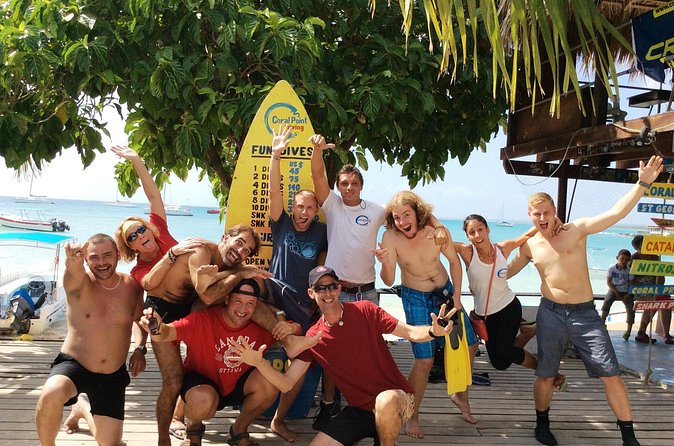
Coral Point Diving operates the course, and Devyn and Elvin are two instructors specifically named in the available feedback. They were praised for being professional, helpful, and experienced in teaching scuba. That is useful information because a beginner course depends heavily on clear instruction and a calm response to questions.
The operator may also provide a multilingual guide. If language support is important to you, ask which instructor will lead your dates and what languages will be available. The supplied details confirm that multilingual instruction may be offered, but they do not guarantee a particular language or instructor for every booking.
A maximum of six participants helps keep the class from becoming unwieldy. You still need to speak up if a skill does not feel clear. Scuba training is not the place to quietly copy the person beside you.
The strongest praise attached to this experience focuses on the staff and the value for the cost. That combination makes sense here. You get a full course with required equipment and certification costs included, while the named instructors add a personal element to what could otherwise feel like a standard package.
Hotel pickup from Bayahibe-Dominicus
Pickup and drop-off are included, but only from resorts in Bayahibe-Dominicus. If you are staying elsewhere in La Romana, do not assume transport is covered. The meeting point is C. la Bahia 1 in Bayahibe, and the activity ends back at that meeting point.
The stated start time is 8:30 a.m. That early start works well for a course that includes several hours of instruction and equipment work. It also means you should confirm the pickup time with the operator if you are staying at an included resort.
The location details use both Bayahibe and La Romana in describing the course. For booking purposes, treat Bayahibe-Dominicus resort pickup as the firm transport rule. If your accommodation is outside that area, you may need to reach the meeting point yourself, though the provided information does not specify a separate transfer price or arrangement.
Mobile tickets make it easy to keep the booking details on your phone. Confirmation is provided at booking. I would still save the meeting point, start time, and operator contact information somewhere easy to access before the training days begin.
What is included, and what is not
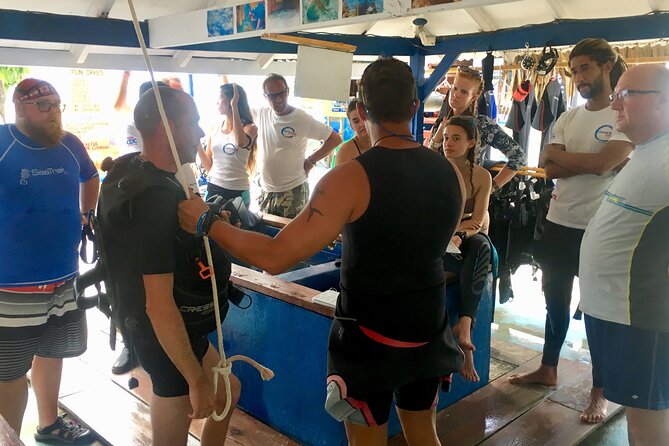
The course includes a professional instructor, all scuba equipment, the certification fee, educational materials, four open water sessions, and round-trip transport from eligible Bayahibe-Dominicus resorts. That is a strong list for a beginner certification package.
Souvenir photos are not included. They are available to purchase, so decide in advance if photos matter to you. You should not book this expecting photography to be part of the $410 price.
The details do not list meals, drinks, personal swimwear, or other incidental items as included. Since the course may involve long training days, ask about food and drink arrangements before you go rather than assuming they are supplied.
Service animals are allowed, and the activity is near public transportation. The operator recommends a moderate level of physical fitness. Those details may help with planning, but they do not remove the swim test requirement.
Who should book this course
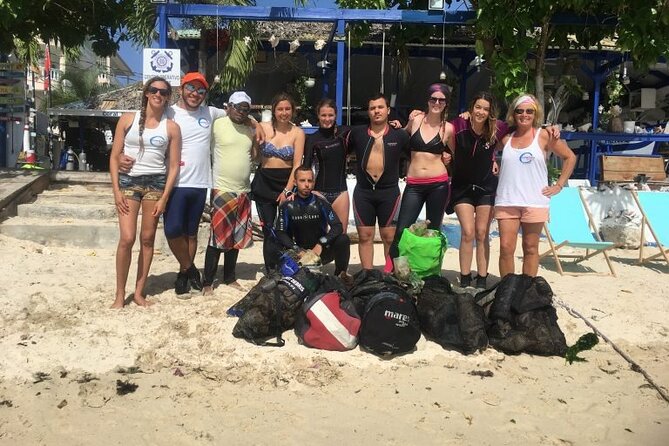
This course suits you if you want a recognized PADI Open Water qualification and can set aside about three days. It is a good match for a first-time scuba student who prefers a structured progression: learn the equipment, practice in the pool, prove basic swimming ability, then move into open water.
It also suits a couple or small group that wants to train together. The six-person maximum keeps the class relatively contained, though individual group size on your date may be smaller or close to the limit.
You should think twice if you only want a quick taste of scuba. The swim assessment and multi-day schedule require commitment. You should also reconsider if you are not comfortable swimming 200 yards or treading water for 10 minutes without support.
The course can work well for people staying at Bayahibe-Dominicus resorts because transport is included. If you are staying outside that zone, the transport advantage is less certain. Confirm the meeting plan before paying.
Practical preparation for the three days
Set aside the full three-day period. The course includes theory, equipment work, pool practice, the swim assessment, and four open water sessions. Even if some training days are shorter, this is not an activity to squeeze between fixed morning and afternoon plans.
Expect to repeat skills. Mask clearing, regulator removal, buoyancy control, and BCD operation are not one-time demonstrations. Repetition helps turn them into habits, which is exactly what you want before certification.
Bring your focus as well as your swimsuit. The course requires you to listen, practice, and demonstrate each skill. If you feel unsure, ask the instructor to explain or show the step again.
Finally, confirm your pickup area, start time, and instructor language needs. Coral Point Diving may use a multilingual guide, and Devyn or Elvin may be among the instructors, but a specific instructor is not guaranteed in the supplied details.
Should you book the Bayahibe PADI course?
Book it if you want a proper certification course rather than a brief resort activity. The combination of four open water sessions, included gear, certification costs, study materials, hotel transport from Bayahibe-Dominicus, and a six-person maximum makes the $410 price reasonable for a full beginner course.
The best reason to choose it is the structure. You learn each skill in a pool before using it in open water, and the course gives you four sessions to show what you can do. The instructors named by the operator, Devyn and Elvin, also received especially strong praise for their professionalism and teaching.
Skip it if you are not ready for the swim assessment or cannot give three days to the process. Also check the transport boundary carefully if you are staying outside Bayahibe-Dominicus. For a committed beginner who meets the fitness requirement, this is a practical route to PADI certification in the Dominican Republic.
FAQ
How long is the PADI Open Water Diver course?
The course lasts approximately three days.
What time does the activity start?
The stated start time is 8:30 a.m.
Where does the course begin?
The meeting point is C. la Bahia 1, Bayahibe 23000, Dominican Republic.
Where does the activity end?
The activity ends back at the meeting point.
Is hotel pickup included?
Yes, pickup and drop-off are included from resorts in Bayahibe-Dominicus only.
How many open water sessions are included?
Four open water sessions are included.
Is scuba equipment provided?
Yes, use of all equipment is included.
Is the PADI certification fee included?
Yes, the certification fee is included in the price.
What swimming ability is required?
You must swim 200 yards using any swimming style, with no time limit, and tread water for 10 minutes without touching the sides of the pool.
Are photos included?
No. Souvenir photos are available to purchase separately.
How many people can join the course?
The activity has a maximum of six participants.
Can I cancel for a full refund?
Yes, you can cancel for a full refund up to 24 hours before the experience start time. Changes or cancellations made less than 24 hours in advance are not accepted for a refund.
Just added around Dominican Republic
- Damajagua Waterfalls Private Tour with Lunch★ 5.0 · 32 reviews
- Half Day Puerto Plata City Tour and Monkey Home Visit★ 5.0 · 31 reviews
- VIP Fascinating Boat Ride & Snorkeling at Sosua Bay★ 4.5 · 40 reviews
- Guided Puerto Plata City Tour★ 5.0 · 66 reviews
- Double Thrill Experience: ATV or Dune Buggy & Zipline★ 5.0 · 44 reviews
- Full Day Tour to the Blue Lagoon and 7 Different Destinations★ 4.5 · 37 reviews
- Cayo Arena, Paradise Island Tour★ 4.5 · 51 reviews
- ATV Adventure★ 4.5 · 103 reviews
Scuba Diving, compared.
Beginner Scuba Diving with Turtles and Videos, San Juan
Read our review →
Sea Trek Helmet Dive at Coral World Ocean Park
Read our review →
Curacao Helmet Diving-Walk the Ocean Floor, No Swimming Required
Read our review →
Two-Tank Morning Dive Trip for Certified Divers
Read our review →
Two-Tank Dive for Certified Diving in St Thomas
Read our review →
Scuba Doo Diving Experience in Punta Cana
Read our review →Browse the lists this tour appears in