
Reviewed · SCUBA DIVING
Discover Scuba Diving Experience
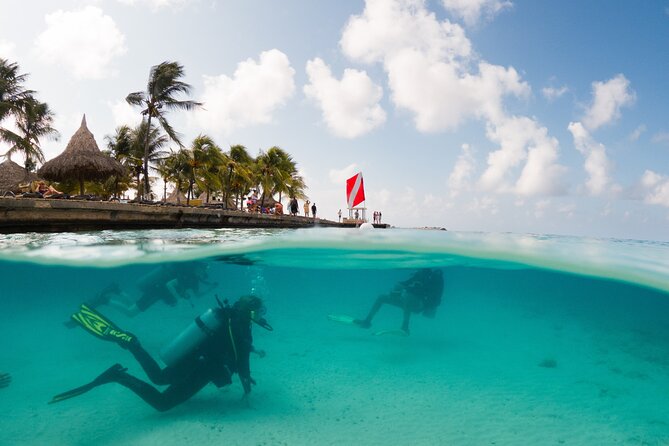
Jan Thiel Bay gives you a gentle first look at the underwater world without committing to a full certification course. At Scuba Do, you learn the basics on the beach, get used to breathing through the regulator, and then head out with a certified instructor to explore the house reef.
I like two things right away: the maximum group of four, which allows close personal attention, and the beach-based training, which makes those first underwater exercises less intimidating. Instructors including MJ, Sam, and Bjorn have a reputation for patient, calm instruction. The main consideration is medical suitability. Ear, sinus, breathing, balance, and several other health conditions can make this activity unsuitable, so read the restrictions carefully before booking.
- Small groups: No more than four people are scheduled for each session.
- Beach training first: You learn equipment use and basic safety before heading to the reef.
- Jan Thiel Bay house reef: Your first underwater outing takes place close to the activity base.
- Three-hour format: The session includes instruction, equipment setup, practice, and reef exploration.
- Two-week certificate: The introductory session can count as the first lesson toward an Open Water course if you continue.
- $130 price: Equipment, an instructor, and an air-conditioned vehicle are included, while food and drinks are not.
What Your First Three Hours in Jan Thiel Bay Look Like
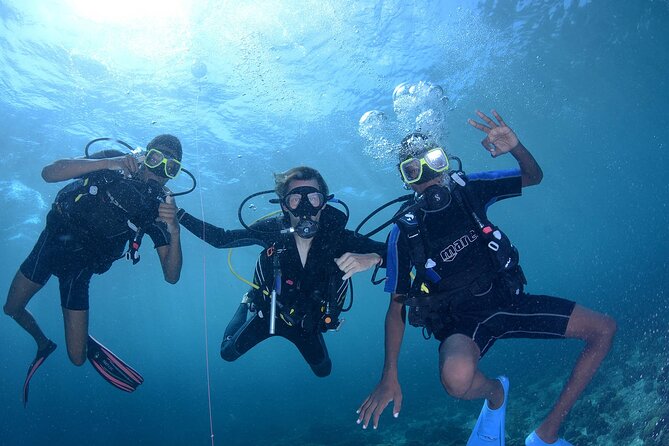
This is not a full scuba certification course. It is an introduction designed to help you decide if breathing underwater and moving with scuba equipment feel right for you.
The experience begins at Dive Center Scuba Do on Kaya Jan Thiel in Willemstad. Pickup is offered, and an air-conditioned vehicle is included, but the published meeting point is the dive center, so confirm pickup details when you book. The activity ends back at the meeting point.
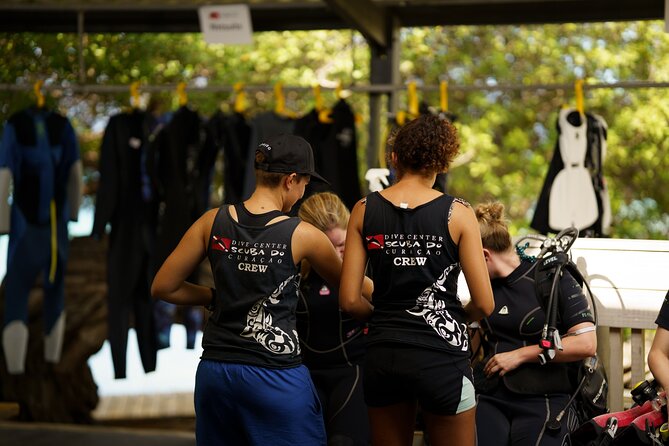
Once you arrive, the instructor takes you through the basic safety rules. You learn what the equipment does, how to set it up, and how to use it properly. This classroom-style portion matters more than it may sound. A first underwater session can feel strange, and knowing how your mask, regulator, tank, and other equipment work helps you stay calm.
The teaching is practical rather than academic. You are not expected to master the entire sport in one morning. Instead, the instructor gives you the essentials needed for a controlled first outing.
After the briefing, you practice just off the beach. This is one of the strongest parts of the experience because you can focus on breathing and body position before heading toward the reef. If you feel nervous, the instructor can work with you at a slower pace. The small group size is especially useful here.
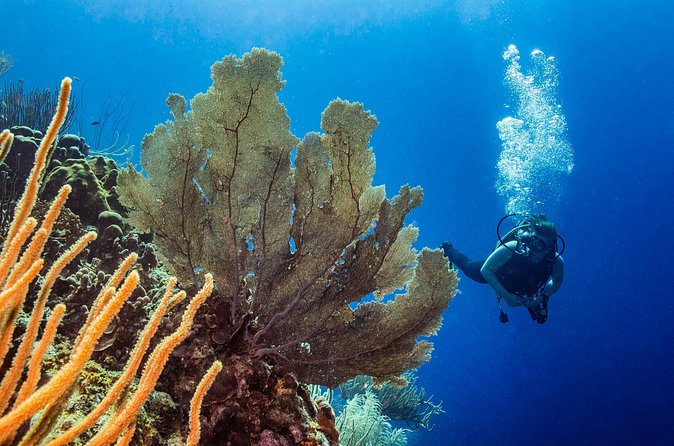
Once you are comfortable with the basic exercises, you make your first guided underwater tour of the house reef in Jan Thiel Bay. The instructor stays with the group, points out the reef and marine life, and explains what you are seeing. The emphasis is not just on getting underwater, but on helping you understand the bay and its living world.
The precise amount of time spent at each stage can vary. Your comfort, the group, and the conditions all matter. Plan on roughly three hours from arrival to return.
Why the Four-Person Limit Matters
A maximum of four participants is a major advantage for a first attempt. Scuba equipment can feel bulky, and small issues such as mask fit, breathing rhythm, or equalizing pressure are easier to address when the instructor is not managing a large crowd.
The small group also gives you a better chance to ask questions. If you are unsure how to clear your mask or adjust a piece of equipment, you can get help without feeling rushed.
This matters even more if one person in your party has prior experience and another is completely new. One participant described joining with a spouse who had never tried scuba before and was nervous about open water and pressure equalization. The instructor, MJ, stayed close and offered patient assistance. That kind of support is exactly what you want for a first attempt.
The group limit does not guarantee a private lesson. Four participants may still have different comfort levels. But compared with a large introductory group, it gives you a much better chance of receiving direct attention.
More Scuba Diving in Curacao
- Discover Diving in Curacao
★ 5.0 · 886 reviews - Curacao Helmet Diving-Walk the Ocean Floor, No Swimming Required
★ 5.0 · 761 reviews - Discover Scuba Diving in Curacao
★ 5.0 · 179 reviews
Learning the Equipment Before Meeting the Reef
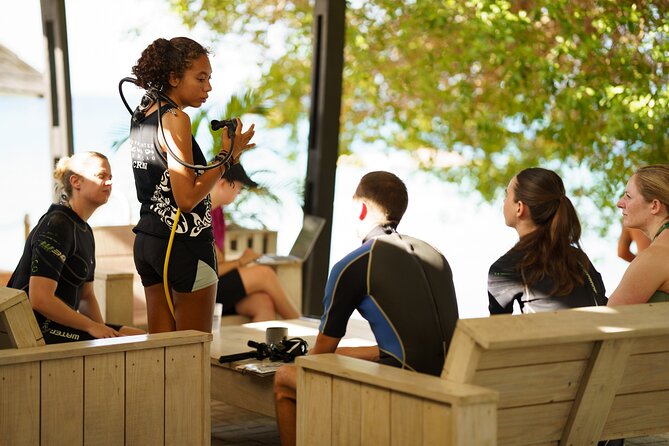
The equipment session is the practical heart of the program. You learn how to set up the scuba gear and follow basic safety procedures before entering the water. This approach keeps the first reef outing from becoming a jumble of unfamiliar tasks.
You should expect to spend time learning how to breathe through the regulator and how to respond to simple underwater situations. The instructors focus on helping you feel comfortable rather than rushing you toward the reef.
That calm approach has value for people who are curious but unsure. You do not need to arrive already knowing how scuba works. You do need to listen carefully, follow instructions, and be willing to communicate if something feels wrong.
If you have been scuba certified before, the orientation is still useful. One participant with previous experience noted that the instructor gave a clear rundown despite that background. The session is built around safety, so the basic explanation is part of the experience for everyone.
The Jan Thiel Bay House Reef
The underwater portion takes place at the house reef near Scuba Do. Because the program starts just off the beach, you avoid a complicated boat departure and can move from practice to reef exploration in the same general area.
That simplicity is a good fit for beginners. You spend less time worrying about boat logistics and more time learning how to move underwater. The instructor also provides information about Jan Thiel Bay, the reef, and the marine life you encounter.
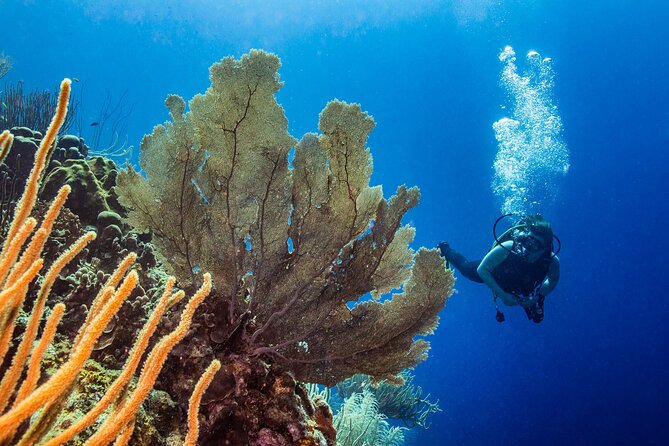
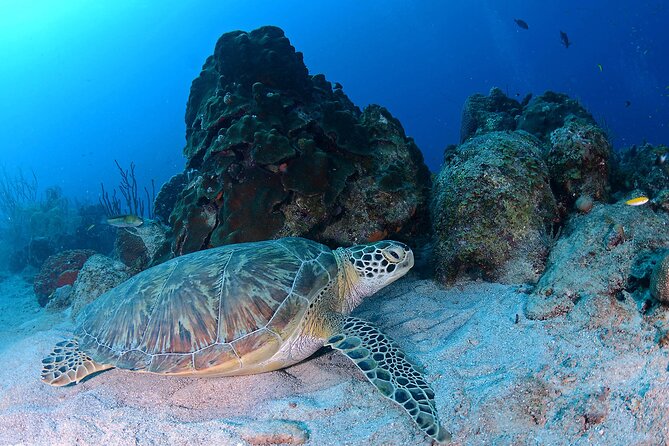
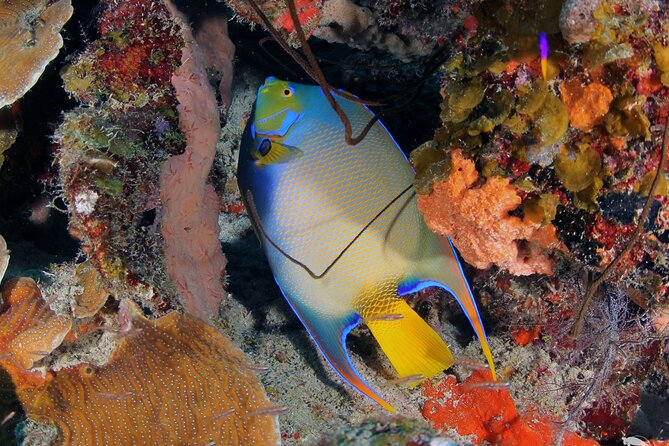
The reef is the main reason to choose this experience instead of practicing scuba in a pool. You get an introduction to a real marine setting, with colorful coral and the possibility of seeing local sea life. The exact animals and conditions are not guaranteed, but the instructor helps you notice what is around you.
Keep your expectations sensible. This is a first underwater outing, not an advanced marine-life expedition. The value comes from learning how to function underwater in a genuine reef setting, then deciding if you want to continue.
Patient Instruction for Nervous Beginners
The most important quality in a first scuba session is not speed. It is patience.
Instructors associated with this program include MJ, Sam, and Bjorn. The teaching style described by the experience is safety-focused and relaxed, with time for questions and basic practice. That is useful if you feel uneasy about open water or have trouble equalizing.
Equalizing pressure can be a concern for people with sinus issues. You should tell the instructor about any difficulty as soon as it appears, rather than trying to push through it. A careful instructor can help you understand the process, but you must also be honest about your comfort and health.
One participant had a nervous first-time companion who struggled with equalization. The instructor stayed nearby and offered support. This is a helpful example of what a small-group lesson can provide, though no operator can promise that every medical or comfort issue will be resolved in the water.
The session is best for people who want a measured introduction. It is less suitable for anyone hoping to skip the lesson and get straight to sightseeing.
More scuba diving off Curacao:
- PADI Open Water Course in Curacao
★ 5.0 · 149 reviews - Discover Scuba Dive in Curacao
★ 5.0 · 148 reviews - Guided Shore Dive for Certified Divers with Scubaçao (2 tank)
★ 5.0 · 128 reviews - Introduction Shore Dive with Scubaçao (1 dive)
★ 5.0 · 108 reviews
What the Two-Week Certificate Means
At the end of the session, you receive a certificate valid for two weeks. This does not make you a certified scuba diver, and it does not replace an Open Water course.
Its practical value is that the introductory session can count as the first lesson toward an Open Water course if you decide to continue within that period. It may also allow you to join another accompanied introductory session, described as a repeat discover scuba experience.
This gives you a useful bridge between curiosity and formal training. You can try the equipment, learn how your body responds underwater, and then decide if a longer course makes sense.
Do not treat the certificate as a permanent qualification. If you want to scuba independently, you will need proper certification through an Open Water course.
Is $130 a Fair Price?
The price is $130 per person. For that amount, you receive scuba equipment, a dive guide, the instruction, and use of an air-conditioned vehicle. Pickup is offered, though you should confirm exactly how it works for your location.
The price is fair if you want a guided introduction and would otherwise need to arrange equipment and instruction separately. The small group adds value because you are paying for close supervision, not just access to the water.
It is less of a bargain if you already hold certification and only want an independent reef outing. This program is designed for first-timers and people returning to scuba through an accompanied introductory session.
Lunch, coffee, tea, and alcoholic drinks are not included. Plan your food and drinks separately. The experience takes about three hours, so you may be ready for a meal afterward, especially since the activity ends back at the meeting point.
A nearby resort setting can make the post-session part easy. You may find food and drinks available in the surrounding area, but those purchases are separate from the $130 price.
Who Should Book This Experience?
This is a strong choice for adults and children age 10 or older who want to try scuba without enrolling immediately in a full course. It also suits couples or families where one person is experienced and another needs a careful introduction.
The maximum group of four makes it especially appealing for people who value personal instruction. It is also a practical option if you want to combine a short lesson with a real reef outing rather than spend the entire session in a pool.
You should be comfortable following instructions and communicating clearly with the guide. The water portion is supervised, but you remain responsible for telling the instructor if you feel discomfort, fear, pain, or breathing trouble.
This experience is not recommended for people with an ear infection, a history of ear or sinus surgery, serious ear problems, balance issues, a current cold or bronchitis, or trouble breathing. It is also not recommended for people with asthma, a previous pneumothorax, nerve damage, diabetes, epilepsy, a prior colon operation, severe claustrophobia, or prescription medication that may affect mental capacity.
The listed restrictions are extensive for a reason. Scuba places unusual pressure on the ears and sinuses and requires clear judgment underwater. If any item applies to you, ask a medical professional and the operator before booking.
Timing, Weather, and Cancellation
The experience requires suitable weather. If poor conditions force a cancellation, you are offered another date or a full refund.
You can cancel for a full refund up to 24 hours before the scheduled start time. Cancellations and changes made less than 24 hours before the start are not accepted for a refund.
Confirmation is sent within 48 hours of booking, subject to availability. Since the experience is often booked well ahead, planning about two months in advance is sensible if your schedule is fixed.
Service animals are allowed, and most people can participate if they meet the health and age requirements. The activity uses a mobile ticket, so keep your booking information available on your phone.
The Best Reasons to Choose Scuba Do
The strongest case for this experience is the combination of three details: a real reef, beach-based practice, and a four-person limit.
You get enough instruction to understand the basics, but you do not need to sign up for a full certification course before finding out if scuba suits you. The instructor-led format also means you are not left to figure out unfamiliar equipment on your own.
The staff’s patient manner is another reason to consider it. Names such as MJ, Sam, and Bjorn appear in connection with the program, and the teaching emphasis is clear: safety, calm pacing, and attention to each participant.
The main limitation is that three hours can only provide an introduction. You will not finish as an independently certified scuba participant, and the reef portion depends on your comfort, health, and conditions.
Should You Book It?
Book this experience if you are at least 10, medically suited for scuba, and curious about breathing underwater but not ready for a full course. The four-person maximum, beach practice, and guided reef outing offer a sensible first step.
I would be cautious if you have any listed medical condition, severe claustrophobia, or uncertainty about your ability to equalize. Ask before paying, and do not assume the certificate replaces formal certification.
For the right person, $130 buys more than equipment rental. It buys a structured introduction, close supervision, and a chance to discover Jan Thiel Bay from below the surface without making a long-term commitment.
FAQ
How long does the scuba experience last?
The activity lasts approximately three hours, including instruction, equipment setup, underwater practice, reef exploration, and the return to the meeting point.
Where does the experience begin?
It begins at Dive Center Scuba Do on Kaya Jan Thiel in Willemstad, Curaçao.
Where does the activity end?
The activity ends back at the meeting point.
Is pickup available?
Pickup is offered, and an air-conditioned vehicle is included. Since the listed meeting point is the dive center, confirm the pickup arrangements when booking.
What is included in the price?
The price includes scuba equipment, an air-conditioned vehicle, and a dive guide.
Are food and drinks included?
No. Lunch, coffee, tea, and alcoholic beverages are not included.
What is the minimum age?
The minimum age is 10 years.
Is this a scuba certification course?
No. It is an introductory experience. The certificate you receive is valid for two weeks and may allow the session to count as the first lesson toward an Open Water course if you continue.
Can I cancel for a full refund?
Yes. You can cancel at least 24 hours before the local start time for a full refund. Cancellations or changes made less than 24 hours before the start are not accepted for a refund.
Just added around Curacao
- Private Photoshoot Curacao – Capture Your Memories in Willemstad★ 5.0 · 36 reviews
- West Coast Full-Day Tour with Beaches, BBQ and Blue Room★ 4.5 · 209 reviews
- Turtle Swim at TurtleBay visit Flamingos & KnipBeach Safari Truck★ 3.5 · 35 reviews
- UTV Buggy and Snorkeling Tour in Willemstad Curacao★ 5.0 · 38 reviews
- Unique Private Experiences Tour in Curacao★ 5.0 · 32 reviews
- 2-Hour TukTuk Rental with an Experienced Guide and Driver★ 4.5 · 237 reviews
- TukTuk’s Adventure Fun Tour in Curaçao★ 4.0 · 92 reviews
- Splashy Iguana Tour in Curacao★ 5.0 · 113 reviews
Scuba Diving, compared.
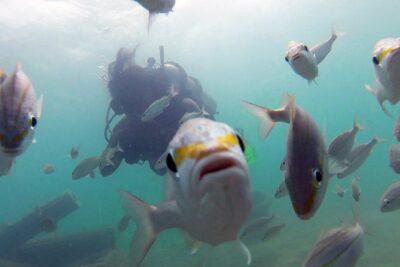
Beginner Scuba Diving with Turtles and Videos, San Juan
Read our review →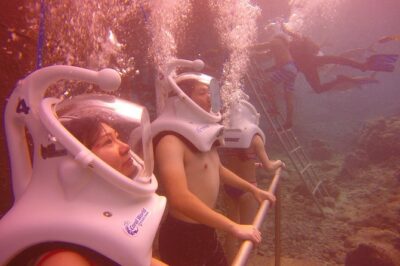
Sea Trek Helmet Dive at Coral World Ocean Park
Read our review →
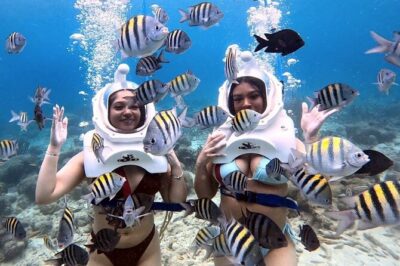
Curacao Helmet Diving-Walk the Ocean Floor, No Swimming Required
Read our review →
Two-Tank Morning Dive Trip for Certified Divers
Read our review →
Two-Tank Dive for Certified Diving in St Thomas
Read our review →
Scuba Doo Diving Experience in Punta Cana
Read our review →Browse the lists this tour appears in