
Reviewed · HIKING & TREKKING
Arikok Adventurous Hiking Experience in Aruba
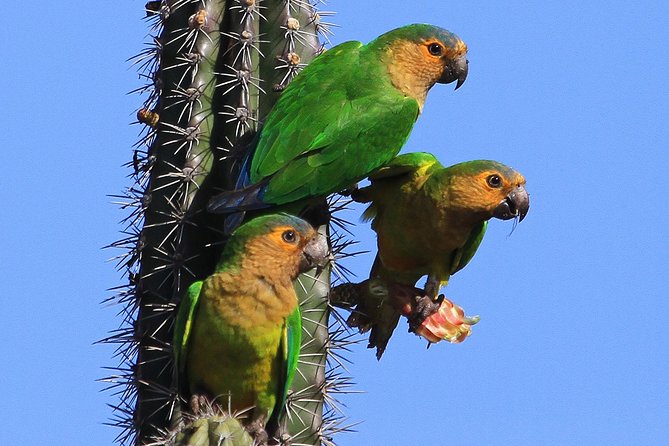
Arikok National Park gives you the side of Aruba that beach resorts cannot show you: dry hills, cactus, volcanic rock, old buildings, cave paintings, and wildlife found nowhere else. I like the native plants and animals here, especially the chance to learn about the shoco burrowing owl, cododo whiptail lizard, prikishi parakeet, and cascabel rattlesnake.
I also like the practical setup. Hotel or cruise-port pickup, bottled water, park admission, and a roughly three-hour outing are included for $57. The main caution is that this is not a flat stroll. Expect dust, loose rock, cactus, steps, heat, and possibly a sizable hill near the end. Also, the guide may be a company guide rather than an actual government park ranger.
Key points to know before you book
- See Aruba beyond the beaches: The route takes you into the island’s dry interior, with unusual rock formations, cactus, old structures, and wide views.
- The walk is mild to moderate: Most people with decent fitness should manage it, but rocks, steps, heat, and one larger incline require care.
- Guides make the park meaningful: Joshua, Uri, Ari, Brandon, Chris, Rambo, and others have led tours, explaining wildlife, plant uses, conservation, and local history.
- Wear proper shoes and clothing: Athletic shoes with cushioning, long trousers, sun protection, and clothes you do not mind getting dusty are sensible.
- The three-hour outing stays focused: You visit the park’s inland highlights, not every corner of Arikok. Coastal areas require a different excursion.
- Pickup adds real value: Transport from your hotel or cruise ship removes the need to arrange a car and helps you reach the park without fuss.
Why Arikok belongs in an Aruba itinerary
Many Aruba trips stay close to the sand, pools, and restaurant strips. Arikok National Park changes the rhythm. The island’s interior is dry, open, and rugged, with ground shaped by lava, quartz diorite, and limestone. Cactus rises from the rough soil, lizards scurry among stones, and the wind can make the heat feel less oppressive in one spot and more noticeable in the next.
I like this outing because it puts nature and local culture together. You are not simply walking for exercise. The guide explains how plants fit into island life, points out animal habitat, and connects the park to Aruba’s past, including gold mining and older settlements.
The $57 price is fair for a three-hour guided outing when you count the park fee, bottled water, professional guide, driver, and hotel or port transfers. You could spend less by visiting on your own, but then you would miss much of the meaning behind the plants, rock formations, and historic sites. The best value comes if you want interpretation rather than just a trail and a viewpoint.
More hiking tours around Aruba:
- Private sunrise hike to Aruba’s Natural Pool (Conchi)
★ 5.0 · 167 reviews - Private Aruba National Park Hiking & Natural Pool Swimming
★ 5.0 · 120 reviews - Sunrise Hike & Swim in Natural Pool: Escape the Crowds and Heat
★ 5.0 · 81 reviews
The 9 a.m. pickup and ride to the park
The day begins at 9 a.m. with pickup from your hotel or cruise ship. The driver-guide takes you toward Arikok National Park, and the ride is part of the experience rather than dead time.
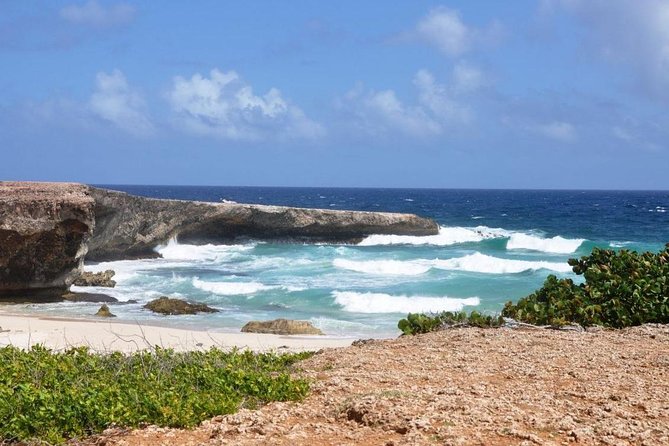
Depending on the guide, the drive may include comments about Aruba’s neighborhoods, island history, or the Ayo rock formation. Uri, for example, used the ride to explain local places and their cultural importance before the hike began. That sort of introduction helps you understand that Aruba is more than a resort zone.
Pickup is especially useful for cruise passengers, since you do not need to arrange a taxi to the park or worry about finding the entrance. It also makes the outing easy to fit into a morning on the island. The vehicle ride is described as comfortable and fairly quick, though total pickup time can vary depending on where you are staying and who else is collected.
The group can reach up to 25 people. That is not a tiny nature walk, and it matters if you want a quiet, highly personal tour. A larger group can also affect the pace and how clearly you hear the guide, especially if you are toward the back. One practical suggestion is to stay close enough to the guide to catch the plant and wildlife explanations.
Starting at the sustainable visitors center
At Arikok’s visitors center, you meet the hiking guide and get your first look at the park’s native animals. The center has a modern sustainable design and displays creatures such as the Aruban whiptail lizard, the Aruban cat eye snake, and the endangered Aruban rattlesnake.
This stop gives the hike useful context. Instead of hearing a string of unfamiliar local names on the trail, you have a better idea of what you might see. The park protects species that developed on Aruba and are closely tied to its dry, unusual environment.
The shoco, or Aruban burrowing owl, is one of the park’s best-known animals. The prikishi, or Aruban parakeet, and cododo lizard are other local species you may hear about. Wildlife sightings are never guaranteed, especially in a hot, open setting, but the guide can still show you signs of animal life and explain how the species survive.
You may also hear about the cascabel, Aruba’s rattlesnake. This does not mean the hike is a snake hunt, and several people saw lizards and birds without seeing snakes. Still, the warning is useful: listen to the guide and do not reach into holes, brush, or cactus.
Walking through cactus, rock, and open desert
The trail is generally clear and maintained, but it is not a paved park path. You walk across dry ground with rocks, cactus, uneven surfaces, and sections of steps. One person described the effort as somewhere between an easy walk and a hard hike, which is a good way to think about it.
I would rate the outing mild to moderate rather than strenuous. Several people in their twenties through seventies managed it, and the route includes regular pauses. Still, heat changes the experience. A calm, sunny morning can make even a modest incline feel harder than expected.
Wear athletic shoes with a bit of cushioning. Heavy hiking boots are not necessary for most people, but thin sandals are a poor choice. Long trousers help protect your legs from cactus and brush, and you should expect plenty of dust. Bring sun protection, though bottled water is provided before and after the hike.
The cactus deserves respect. It is easy to focus on the guide’s story or a view and step too close to a thorny plant. Keep your hands and bags away from the sides of the trail, and watch your footing. After rain, puddles can collect on the path, leaving you wet and muddy for the rest of the walk.
A few more Aruba days to weigh up
- Ultimate Island Jeep Safari with Natural Pool, Baby Beach & Lunch
★ 5.0 · 8,653 reviews - Aruba UTV, ATV Adventure to Secret Beach and Cave Pool
★ 5.0 · 7,730 reviews - Aruba Natural Pool and Indian Cave Rugged Jeep Safari
★ 5.0 · 7,713 reviews - ThrillSeekers: Aruba UTV Tour & Cliff Jump at Natural Pool
★ 5.0 · 5,733 reviews
Plants, animals, and the stories behind them
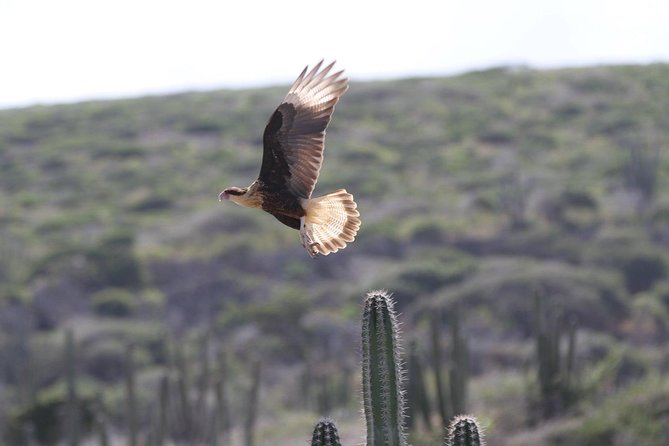
The strongest part of the experience is the interpretation. Guides such as Joshua and Uri have been praised for explaining both the natural world and Aruba itself. Other guides, including Ari, Brandon, Chris, and Rambo, have also led groups through the park.
The better guides do more than name a plant. They explain which plants have useful or harmful properties, how local people have used them, and how the park’s ecosystem works. That turns a field of cactus and scrub into something you can read.
You might see geckos, lizards, birds, goats, or other small wildlife. Birds can be elusive, so do not book this expecting a guaranteed parade of animals. The pleasure is in paying attention. A lizard on a rock, a bird call in the brush, or a goat on a distant slope can become a memorable part of the morning when you know what you are seeing.
The guides also discuss conservation. Arikok protects native species and plant life that have adapted to Aruba’s unusual soil and climate. That context is important because the terrain can look barren at first glance. It is not empty. It is a specialized environment that rewards a slower look.
Historic sites tucked into the route
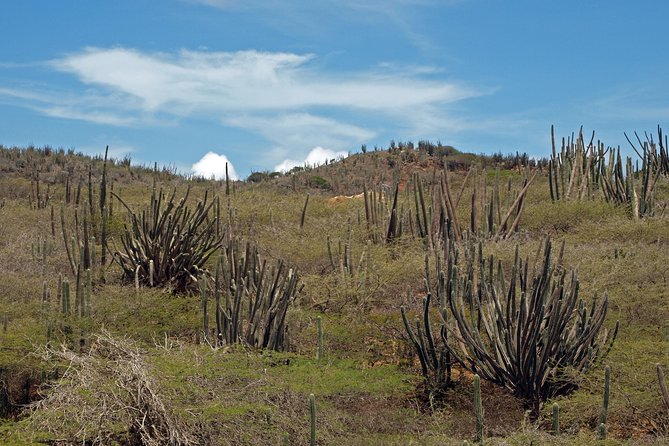
Nature is only half of the outing. The walk also brings in Aruba’s past through historic sites, old structures, and indigenous cave paintings.
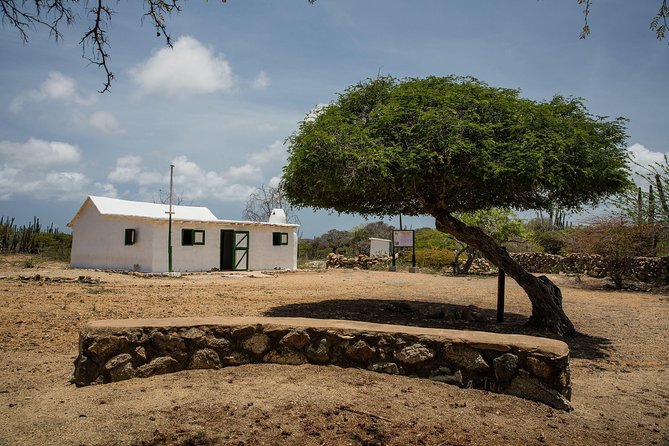
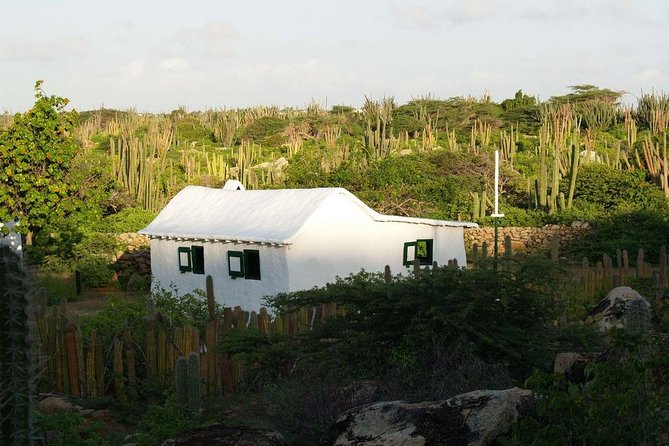
You may see an old adobe house, a reminder of earlier island life, along with rock shelters marked by indigenous art. These stops break up the walking and give the guide a chance to explain how people lived and worked in this dry region.
Gold mining is another topic that may come up. The park preserves traces of Aruba’s working past, so the hike links the geology beneath your feet to the island’s economic story. I like this combination because it keeps the tour from becoming a simple photo stop.
The exact balance between nature and history can depend on the guide and group pace. If the group moves slowly, the guide may spend more time at each stop. If you want a long, demanding trek with many miles of trail, this is probably too short. The goal is an introduction to Arikok, not an all-day crossing of the park.
Views from the high points
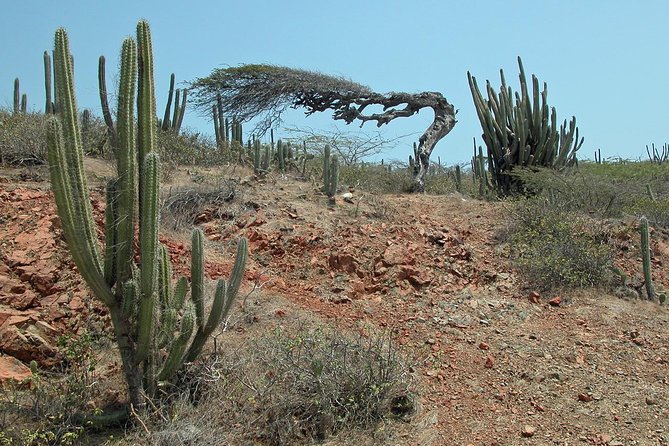
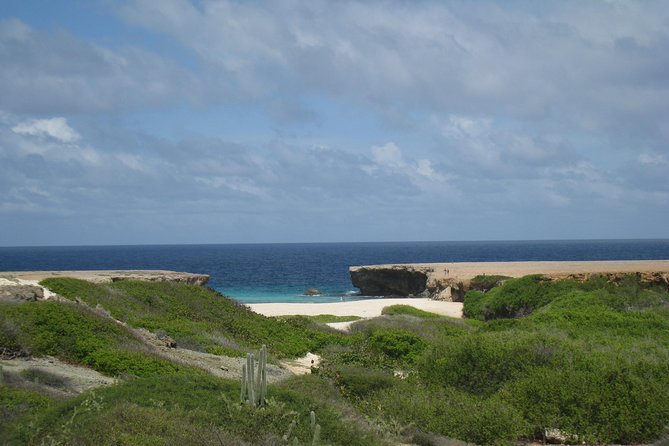
The inland views are one of the main rewards. From higher ground, you can look across Aruba’s dry terrain and see how the rock formations shape the park. The scenery is broad rather than lush, with muted desert colors, cactus, and exposed stone.
Joshua has been praised for explaining the park’s history and nature from a mountaintop view. That kind of stop gives the hike a clear payoff: you work your way up, pause to catch your breath, and get a better sense of the island’s interior.
The route does not focus on Arikok’s coastal areas. If your main goal is sea cliffs, beaches, or ocean views, you will need another tour or a separate visit. This outing is centered on the park’s inland plants, animals, geology, and historic sites.
What the fitness level really feels like
The description of the hike can sound more rugged than the actual effort for a fit person, but you should not treat it as a casual resort stroll. The path has steps, medium inclines, loose stones, and a larger hill near the end. Heat and still air can be more tiring than the distance.
The minimum age is 9, and children must be accompanied by an adult. A child who enjoys walking and can manage uneven ground may do well, but this is not a stroller-friendly or hands-off family activity. You need to keep an eye on footing and cactus.
I would choose this tour if you can comfortably walk for several hours in warm conditions. You do not need advanced hiking skills, but strong physical fitness is recommended. If you have trouble with hills, steps, or uneven ground, consider that before booking.
Who will get the most from the $57 price
This tour suits you if you want a guided introduction to Arikok without renting a car or arranging several separate services. The fee covers the park entrance, transport, driver-guide, professional guide, bottled water, and the hike itself.
It is also a good fit for cruise passengers with a morning available. Pickup from the port simplifies the day, and the three-hour length leaves room for other plans. Hotel pickup and drop-off work well for visitors who want to see the island’s interior without giving up the rest of the day.
The value is weaker if you already have a car, know the park well, and prefer exploring alone. It is also not the best choice if you want a long, strenuous hike or a coastal tour. You are paying for access, transportation, and explanation, not for an extreme physical challenge.
Guide quality can vary. Many guides have been praised for their warmth, humor, and command of Aruba’s plants and history. A few practical issues are worth noting: a company guide may be presented as a park ranger, and people at the back of a group may have trouble hearing. Staying near the front helps.
What to bring for a better morning
Keep your packing simple but sensible:
- Athletic shoes with good grip and cushioning
- Long trousers or other clothing that protects your legs
- Sun protection
- A phone or camera with a secure strap
- A light layer if you are sensitive to wind
- Water beyond the provided bottle if you usually drink a lot in heat
You do not need heavy hiking boots for most versions of the route. Avoid open footwear, and do not wear your favorite light-colored clothes if dust bothers you.
Rain can change the outing. Wet weather may produce puddles and slippery patches, while poor conditions can lead to a canceled tour, a different date, or a full refund. Changes or cancellations made less than 24 hours before the start time are not refundable, so keep that cutoff in mind.
Should you book the Arikok hike?
Book it if you want a short, guided look at Aruba’s interior, especially if hotel or cruise-port transport matters to you. The best reasons are the native wildlife explanations, the mix of nature and history, the wide inland views, and the chance to step away from the resort strip for a few hours.
Skip it if you want a serious all-day hike, a coastal route, or a completely private experience. Also think twice if heat, cactus, steps, or uneven ground are a problem.
For most reasonably fit visitors, this is a useful first look at Arikok. Stay near the guide, wear real shoes, protect your legs, and arrive ready for a dusty walk rather than a gentle promenade. At $57, it offers solid value for an informative morning and a far more complete picture of Aruba than the beach alone.
FAQ
How long is the Arikok hiking experience?
The hike and associated transport take about three hours in total.
What time does the tour start?
The scheduled start time is 9 a.m.
Is hotel or cruise-port pickup included?
Yes. Hotel or port pickup and drop-off are included.
What is included in the $57 price?
The price includes local taxes, national park fees, bottled water, a driver-guide, a professional guide, transportation, and the hiking experience.
Is the hike difficult?
The route is generally mild to moderate, but you should expect rocks, cactus, steps, heat, and inclines. Strong physical fitness is recommended.
Can children join the tour?
Children must be accompanied by an adult, and the minimum age is 9.
Can I cancel for a full refund?
You can cancel for a full refund at least 24 hours before the experience starts. Cancellations or changes made less than 24 hours ahead are not accepted for a refund.
Just added around Aruba
- Private Tour: Essential Tour of Aruba★ 5.0 · 68 reviews
- UTV Island Tour around Aruba★ 5.0 · 175 reviews
- UTV and Jeep Island Adventure Mix Up★ 5.0 · 73 reviews
- The Whole Story Tour + A Ride★ 5.0 · 141 reviews
- Arubabound Transfers★ 5.0 · 31 reviews
- Made in Aruba Sightseeing Tour★ 5.0 · 252 reviews
- Aruba Private Luxury Boat Tours – Sail, Snorkel, Fishing and More★ 4.5 · 81 reviews
- Private nature tour: Aruba’s highest point & pristine coral reef★ 5.0 · 107 reviews
Hiking & Trekking, compared.
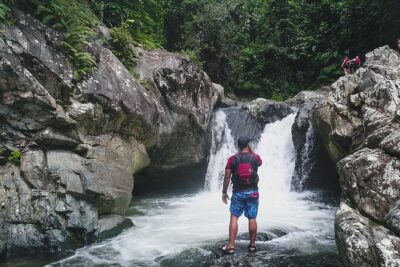
Hike El Yunque Rainforest and Kayak Bio Bay Combo Tour
Read our review →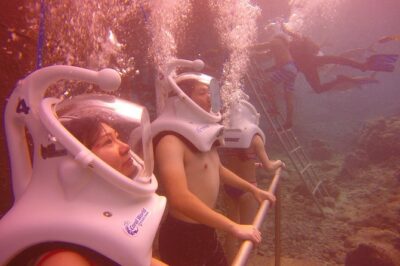
Sea Trek Helmet Dive at Coral World Ocean Park
Read our review →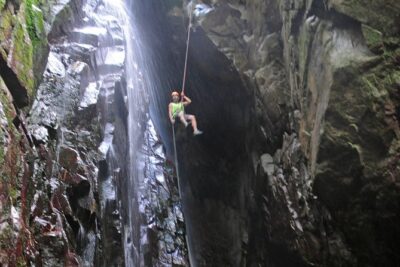
Full-Day Zipline and Waterfall Rappelling Adventure Near San Juan
Read our review →
Cas Cay – Kayak Hike and Snorkel Adventure
Read our review →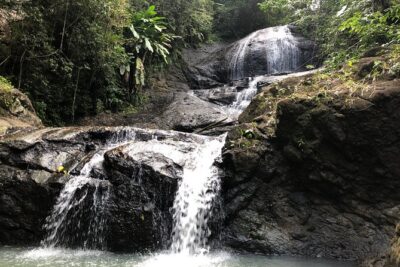
Underwater Sea Trek in San Juan: Explore Beneath the Waves
Read our review →
Puerto Rico Waterfall Hiking Tour: Discover Hidden Gems 2.0
Read our review →
Taino Indian Cave, Arecibo Hike and Beach Tour from San Juan
Read our review →Browse the lists this tour appears in