
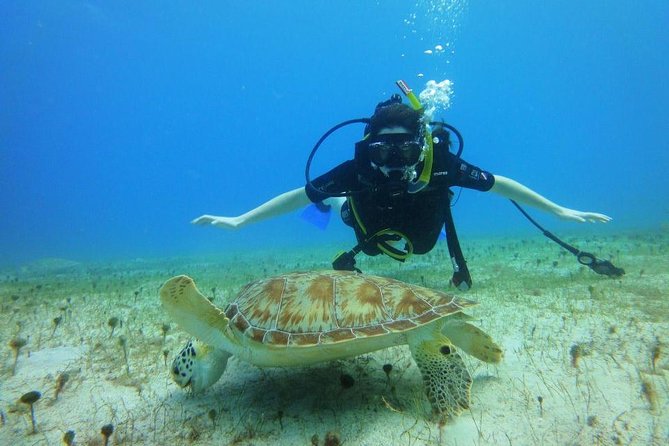
Reviewed · SCUBA DIVING
Discover Scuba Diving with No Certification in St Thomas
The best part of this St. Thomas experience is simple: you get to breathe underwater on a real ocean outing without first committing to a full certification course. An instructor leads a maximum of four students, so you get close attention while learning the gear, hand signals, and basic safety skills.
I like the small four-person group and the gentle path into the water. I also like that you can spend time snorkeling after the scuba session, or pay extra for a second scuba session if the first one leaves you wanting more. The main consideration is the medical screening. Some health answers require signed approval from your doctor, and anyone who cannot meet the scuba requirements will be limited to snorkeling.
Key points to know before booking
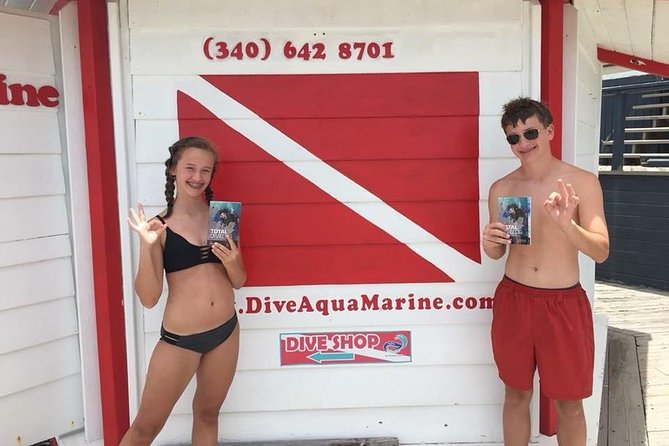
- A true first ocean scuba session: You learn the basics, then head out by boat to see fish, coral, and possibly turtles or rays.
- One instructor for up to four students: That ratio gives you room to ask questions and settle your nerves.
- Snorkeling is included: After your scuba session, you can use the equipment and enjoy another look below the surface.
- A second scuba session costs extra: Many people find the first session helps them relax, making a second one more rewarding.
- Doctor approval may be required: Certain medications, recent surgery, heart or breathing issues, diabetes, and other conditions trigger extra paperwork.
- Plan around your flight: You are advised to wait at least 18 hours after scuba before flying.
Your first underwater breaths at Saga Haven Marina
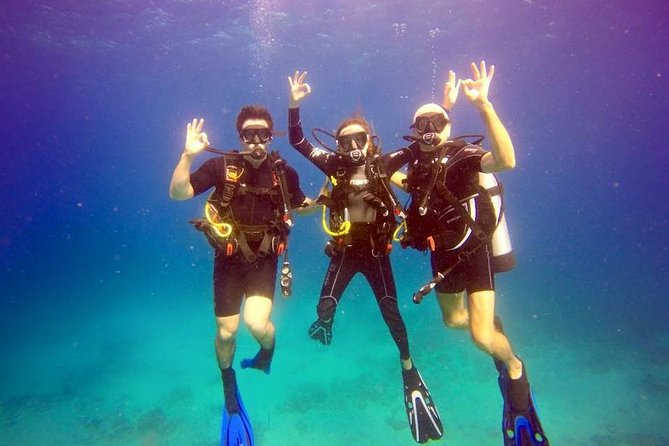
The experience begins at Aqua Marine Dive Center, located at Saga Haven Marina in St. Thomas. You meet the crew at the dock, complete the paperwork, and go through a short lesson before boarding the dive boat.
This is not a classroom-heavy certification course. The aim is to give you enough theory and practice to understand what you are doing and feel ready for the ocean. Your instructor explains how the equipment works, how to breathe through the regulator, and how hand signals help you communicate underwater.
That short briefing matters. Scuba can feel strange at first, especially when you are asked to breathe through your mouth while wearing a mask. The instructors have worked with people who felt anxious, and several guides are specifically praised for their calm approach. Jamie, Ana, Anna, Dave, Spencer, and Jared are among the instructors named by customers, although the guide assigned to you will depend on the day.
You should expect a practical lesson rather than a long academic lecture. Ask questions before leaving the marina. If you are nervous, say so early. The crew can move at a pace that gives you time to get comfortable, and you are never helped by pretending to be calm when you are not.
More Scuba Diving in US Virgin Islands
- Sea Trek Helmet Dive at Coral World Ocean Park
★ 5.0 · 992 reviews - Two-Tank Dive for Certified Diving in St Thomas
★ 5.0 · 456 reviews - Two-Tank Morning Dive Trip for Certified Divers
★ 5.0 · 602 reviews
A boat ride with a very small group
The boat ride gives the instructor time to review the equipment and hand signals. It also sets the tone for the outing. With no more than four students per instructor, this feels far more personal than a large group lesson where everyone is trying to catch the same guide’s attention.
That small ratio is especially useful if you have never tried scuba before. You may need help adjusting your mask, clearing water, controlling your breathing, or simply getting used to the sensation of being below the surface. The instructor can focus on you instead of managing a crowd.
The boat is also where you will notice one of the practical risks of a marine outing: seasickness. One person described becoming very seasick, and the crew took care of them while the rest of the party continued. If you are prone to motion sickness, plan accordingly and tell the crew as soon as you feel unwell. The trip includes water, soft drinks, and snacks after the scuba session, but transportation to the marina is not included.
The entire outing lasts about three and a half hours. That makes it a manageable choice for a half-day in St. Thomas, though you should leave enough time before or after it for transportation and other plans.
What you see below the surface
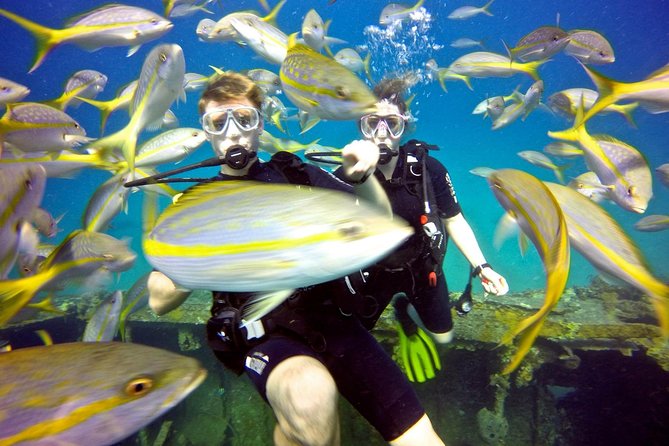
The exact site can vary, but the experience takes you by boat to an open-ocean location. The underwater setting includes tropical fish and coral reef, with the possibility of seeing a turtle, ray, stingray, sea stars, nudibranchs, or an octopus.
Those sightings are not guaranteed, and the sea conditions can affect visibility. Still, the reports of fish, coral, stingrays, turtles, and sea stars give you a clear idea of the type of marine life you may encounter. The instructor may point out interesting creatures and guide you toward parts of the reef worth seeing.
One site mentioned in connection with the outing is the Ledges of Little Saint James. The location has an uncomfortable association because of the island’s former owner and its public history. Some people will not want to visit that area, while others may focus on the underwater scenery. If that setting would bother you, ask the operator about the planned location before booking.
The important point is that this is not a pool demonstration. You are learning in the ocean, with moving water, natural reef, and real marine life. That gives the experience its appeal, but it also means you should expect the sea to be less predictable than a controlled training pool.
The included snorkeling stop gives you a second way to enjoy the water
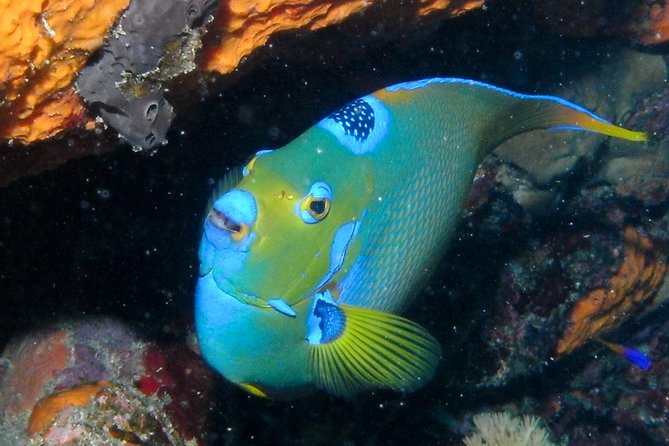
After your scuba session, snorkeling equipment is included. You can float above the reef, watch the fish from the surface, and enjoy the water without the breathing equipment or underwater skills required for scuba.
I like this part of the plan because it gives you a useful fallback. If you find scuba overwhelming, you can still have a rewarding marine outing. One customer was unable to finish the scuba portion after panicking, while the crew remained supportive and allowed the person to enjoy the experience from the surface.
Snorkeling also works well for companions who do not want to try scuba. Children must be accompanied by an adult, and everyone taking part must be able to swim, but the activity is not limited to certified divers. The minimum age is 10.
Some outings have included a stop at Christmas Cove for snorkeling. The exact stop is not promised, so treat that as a possibility rather than a fixed part of every trip. The included mask and snorkel let you make good use of the time after your main session instead of sitting on the boat waiting for the scuba participants.
More scuba diving off St Thomas:
- Beginner Scuba Diving with Turtles and Videos, San Juan
★ 5.0 · 1,743 reviews - Discover Diving in Curacao
★ 5.0 · 886 reviews - Curacao Helmet Diving-Walk the Ocean Floor, No Swimming Required
★ 5.0 · 761 reviews - Hartley Helmet Diving in Bermuda
★ 5.0 · 462 reviews
Why the second scuba session may be worth the extra cost
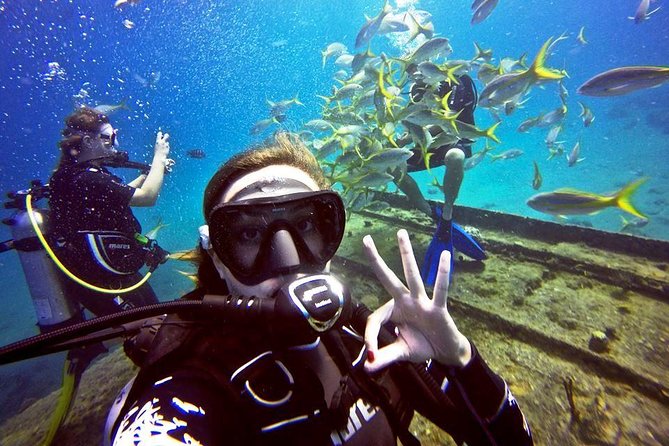
The basic price is $225 per person and includes the lesson, one scuba session, snorkeling equipment, a guide, water, soft drinks, and snacks. A second scuba session costs extra.
For a first-time participant, the first session often includes a lot of adjustment. You are learning to breathe through the regulator, watching your air use, listening for instructions, and trying to stay calm while taking in the reef. That can leave less attention for exploring.
A second session can make sense if you enjoy the first one and want more time below the surface. You already understand the basic equipment and signals, so you can spend more of the next session noticing fish and coral instead of thinking about every new sensation.
Still, do not feel pressured to add it. The extra cost is only worthwhile if you finish the first session feeling comfortable and eager to continue. If you are tired, seasick, or still uneasy, snorkeling may be the better use of your afternoon.
Medical rules deserve careful attention
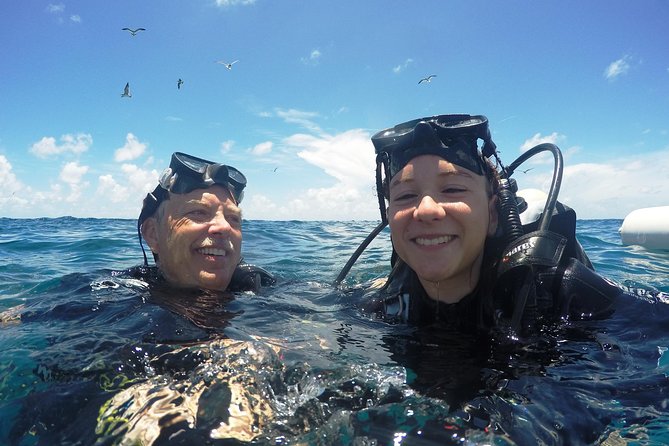
Before booking, read the Diver Medical Questionnaire. You must be able to swim, have a moderate level of physical fitness, and pass the required health screening.
A signed doctor’s form is required if certain answers apply. These include surgery within the last 12 months or ongoing problems from earlier surgery, taking most prescription medications, diabetes or gestational diabetes within the last year, ear disease, recurring sinusitis, asthma, severe allergies, trouble breathing, angina, or other heart conditions.
If you are over 45 and smoke, or have high blood pressure or high cholesterol, you also need approval. Birth control and certain anti-malarial medications are exceptions to the prescription medication rule, though mefloquine is specifically excluded from that exception.
This does not automatically mean you cannot scuba. It means the operator will not make a medical decision for you. Bring the signed approval before the outing. If your answers require doctor clearance and you do not provide it, you can snorkel but cannot take part in the scuba session.
This policy is easy to overlook, so do not wait until the morning of your activity to check. It can make the difference between a full scuba outing and a snorkeling-only day.
The crew’s strongest role is helping nervous beginners
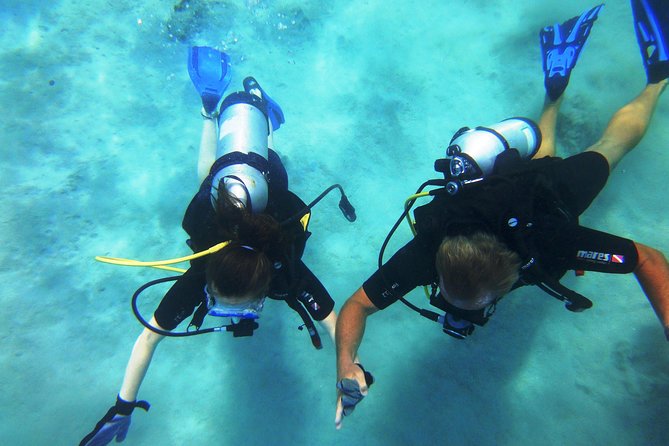
The most consistent strength here is the human side of the instruction. First-time scuba can produce real panic. Your body may not immediately accept breathing underwater, and even confident swimmers can feel uneasy when they cannot simply lift their head and breathe normally.
The instructors receive repeated praise for patience and reassurance. Ana helped one nervous beginner progress from holding her hand underwater to exploring the reef independently. Jamie was described as patient and encouraging when a participant felt overwhelmed. Anna reportedly held a beginner’s hand throughout much of the session and helped that person return to the surface when needed.
That does not mean every person will love scuba on the first try. One participant could not complete the session after panicking. The useful lesson is that the crew appears prepared to respect your limits rather than treat discomfort as a challenge you must overcome.
Tell the instructor what you need. You can ask for a slower start, repeat the instructions, or stop if the experience is too much. A good first session should leave you feeling safe, even if you decide scuba is not for you.
The price, timing, and practical value
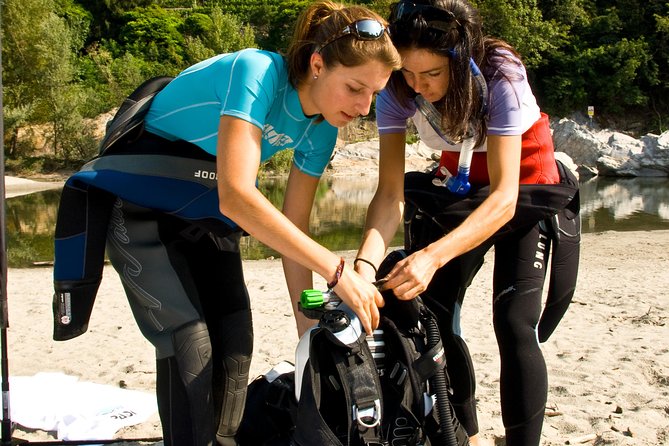
At $225, this is not a cheap way to spend a morning. You are paying for instruction, equipment, boat access, a small group, and the chance to try scuba in the open ocean without the cost and time commitment of certification.
The price makes the most sense if you want a carefully supervised introduction and do not yet know if scuba is for you. A crowded boat or rushed lesson would make the experience harder for a beginner, so the four-student limit adds real value.
You do need to arrange your own transportation to Saga Haven Marina. The tour ends back at the meeting point. Confirmation arrives when you book, and the activity is private to your group, though the small-group format still depends on the scheduled operation.
The experience requires suitable weather. If poor weather forces cancellation, you are offered another date or a full refund. If the minimum number of participants is not reached, you receive the same choice of another date or a refund. Your own cancellation is different: the booking is non-refundable and cannot be changed for personal reasons.
Service animals are allowed, and the marina is near public transportation. You should also keep the 18-hour no-fly period in mind. If you are on a cruise or catching a flight from St. Thomas, schedule this carefully rather than squeezing it into the final hours of your trip.
Who should book this St. Thomas scuba experience?
I would choose this for an adult or child aged 10 and older who can swim, wants a first taste of scuba, and prefers close instruction over a large group. It is also a good fit for a couple or family where one person wants scuba and another prefers snorkeling.
The experience suits you especially well if you are curious but not ready to sign up for a full certification program. You get a real ocean session, not just a shallow-water demonstration, while keeping snorkeling as an option.
I would think twice if you dislike boats, often become seasick, cannot swim, have a medical condition that may require clearance, or have a tight flight schedule. I would also avoid booking without first checking the medical form.
Should you book it?
Book this experience if you want a supportive first step into scuba and value a small group. The strongest reasons are the four-person instructor ratio, the chance to see St. Thomas reef life from a boat, and the included snorkeling time if you prefer to stay near the surface.
If you are unsure, the snorkeling option lowers the risk of a wasted morning, but you still need to accept the non-refundable booking rule and medical requirements. For many first-timers, the session can be the spark that leads to certification. For others, it is simply a well-supervised way to discover that snorkeling is their preferred view of the sea.
FAQ
Do I need scuba certification to take part?
No. This is designed for people who want to try scuba without completing a certification course.
Where does the experience begin?
You meet at Aqua Marine Dive Center at Saga Haven Marina, 6117 Estate Frydenhoj, St. Thomas, VI 00802.
How long does the activity last?
The experience lasts approximately 3 hours and 30 minutes and ends back at the meeting point.
How many people does each instructor lead?
One instructor leads a maximum of four scuba students.
What is included in the price?
The experience includes the beginner lesson, one scuba session, a guide, bottled water, snacks, soft drinks, and snorkeling equipment.
Is a second scuba session included?
No. The standard experience includes one scuba session. You can pay an additional fee to add a second one.
Can I snorkel instead of scuba?
Yes. Snorkeling equipment is included, and anyone who cannot receive medical approval for scuba can snorkel instead.
What is the minimum age?
The minimum age is 10. Children must be accompanied by an adult.
How long should I wait before flying?
You are advised to allow at least 18 hours between scuba and flying.
Just added around St Thomas
- St Thomas Full Day Private Tour (1-10 PPL)★ 4.5 · 35 reviews
- St Thomas Shore Excursion: Mangrove Lagoon Kayak and Snorkel Tour★ 5.0 · 195 reviews
- PARADISE TAXI & TOURS USVI-St.Thomas-Airport Transfer to Marriott Frenchman Cove★ 4.5 · 47 reviews
- Vi Top Taxi & Tours USVI-Scenic Island Tour ,St. Thomas★ 5.0 · 48 reviews
- Paradise Taxi & Tours USVI -St. Thomas, Virgin Islands-Private Group-Island Tour★ 5.0 · 73 reviews
- Paradise Taxi & Tours USVI-St.Thomas-Virgin Islands-Island Magen’s Beach Tour★ 5.0 · 52 reviews
- Day Yacht Excursions throughout the US or British Virgin Islands★ 5.0 · 164 reviews
- Best of Mangrove Lagoon Kayak, Hike and Snorkel Adventure with Picnic Lunch★ 5.0 · 261 reviews
Scuba Diving, compared.
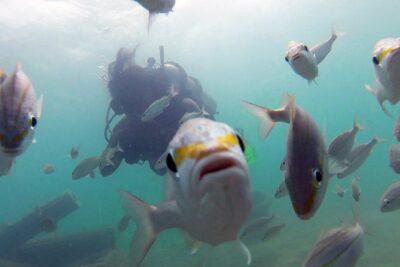
Beginner Scuba Diving with Turtles and Videos, San Juan
Read our review →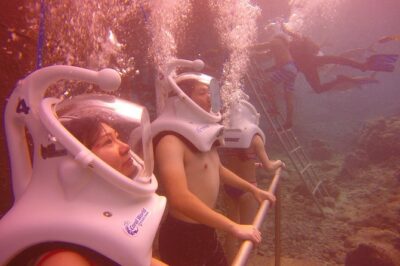
Sea Trek Helmet Dive at Coral World Ocean Park
Read our review →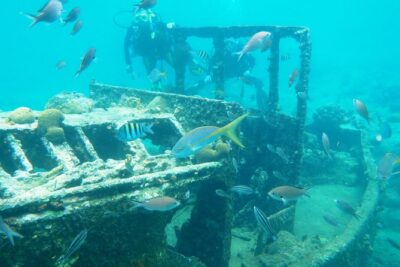
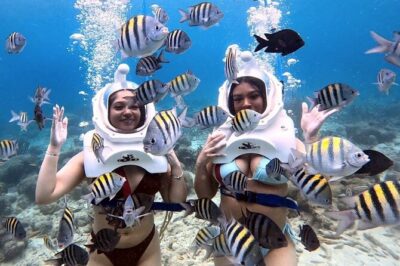
Curacao Helmet Diving-Walk the Ocean Floor, No Swimming Required
Read our review →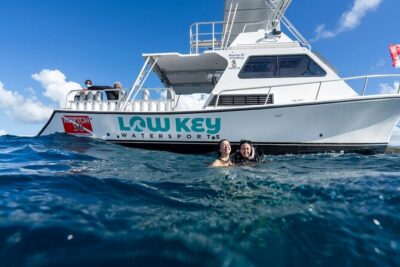
Two-Tank Morning Dive Trip for Certified Divers
Read our review →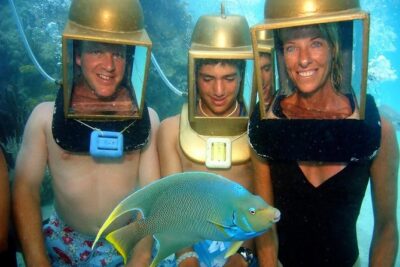
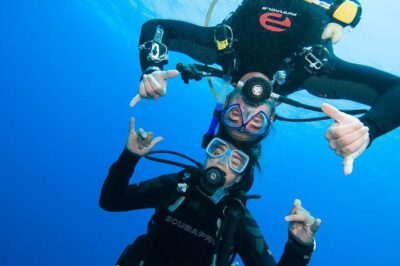
Two-Tank Dive for Certified Diving in St Thomas
Read our review →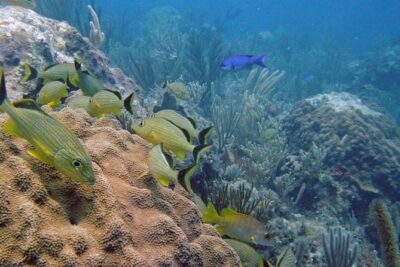
Scuba Doo Diving Experience in Punta Cana
Read our review →Browse the lists this tour appears in